
Fleas in a San Diego home are a house-and-pet problem together. UC IPM: treat the pet and clean the resting areas, because eggs fall off the animal into carpet and bedding. Store bombs that only hit visible adults miss eggs, larvae, and pupae. Pest Pros San Diego matches you with a licensed Branch 2 company. We do not apply IGR or promise the house is clear.
The flea life cycle: why store-bought bombs often fail
UC IPM: cat fleas go egg, larva, pupa, adult. Adult females stay on the host and lay about 20 to 50 eggs per day. Eggs are not sticky, so they fall onto bedding and carpet. They hatch in about 2 to 5 days. Larvae are wormlike, feed on dried blood and flea dirt, and crawl 8 to 15 days before spinning a cocoon. At cool temperatures, fully formed fleas can stay in cocoons up to 12 months. Warmth and vibration from walking or vacuuming stimulate emergence. At normal room temperatures the whole cycle can finish in about 18 days.
Store bombs and open-air foggers mainly hit adults in the open. UC: total-release foggers do not match the coverage of a directed spray unless they contain an insect growth regulator, and treatments other than IGRs often miss larvae at the base of carpet fibers. Pupae are not killed by the usual indoor spray, so adults can keep emerging for about two weeks after a treatment. That is why a room that looked empty can itch again.
How to prepare the house
Vacuum carpets, rugs, upholstery, and along baseboards. UC IPM: vacuuming removes eggs, larvae, and adults and stimulates pupae to emerge. Seal and discard vacuum bags, or empty a canister outside. Wash pet bedding in hot, soapy water at least weekly (UC). Clear floor clutter so a licensed technician can reach edges if you hire one.
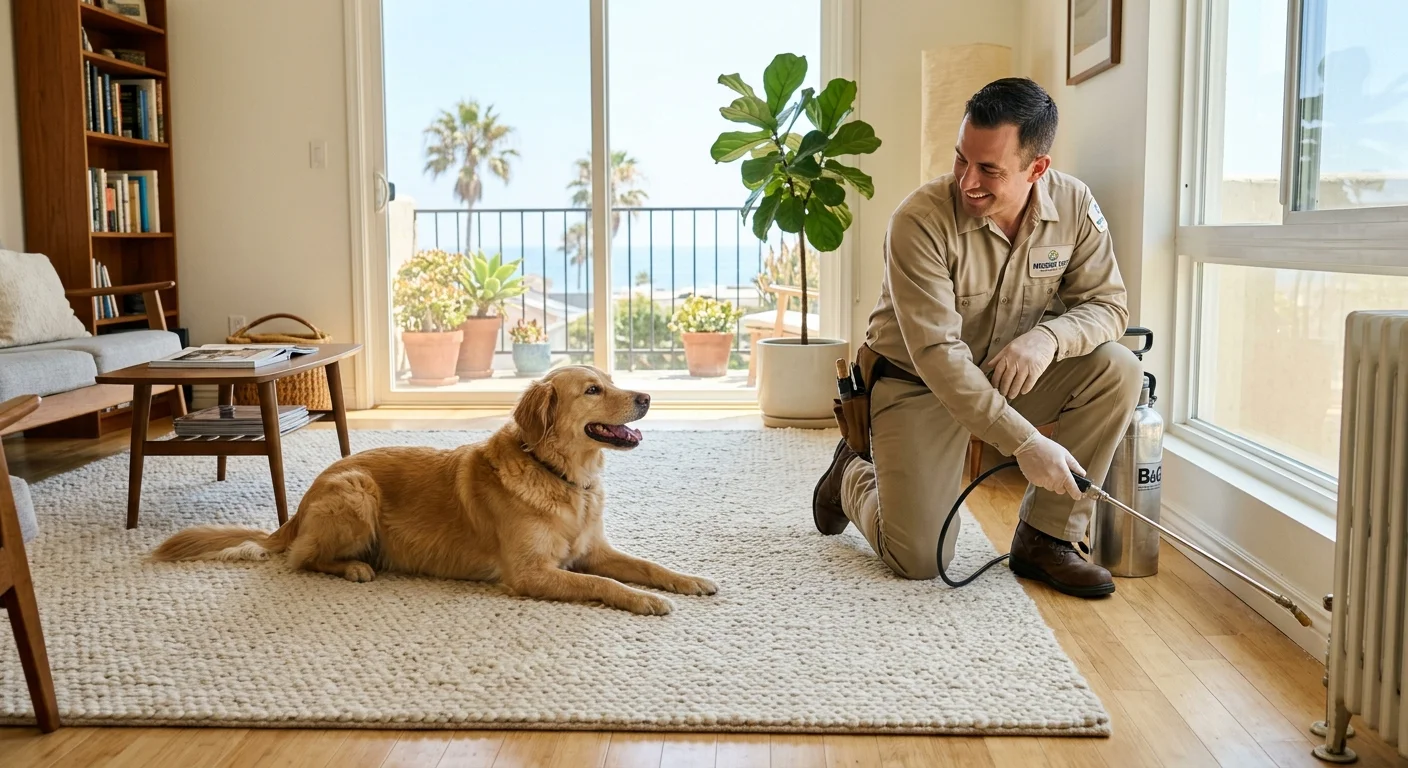
Treat pets on a veterinarian’s product before a house visit, so the animal is not reseeding carpet. People and pets leave during application and until the company says surfaces are dry. Those re-entry times come from the label and the applicator, not from Pest Pros.
What a licensed house visit can include
A Branch 2 inspection (household pests) looks for pet resting spots, carpet, furniture, and shaded outdoor harborage. UC IPM: the most effective indoor products for a home infestation include an IGR (methoprene or pyriproxyfen) plus cleaning, because a spray without an IGR often misses larvae in carpet. Pupae still emerge afterward, so vacuuming continues for about two weeks. That is UC’s sequence. It is not a Pest Pros application.
Yard work, if quoted, is the company’s written scope. San Diego yards can support fleas in shaded pet areas. Ask what they will treat and what they will not. Service type: flea & tick treatment. Related: ticks in San Diego.
How to keep fleas from coming back after treatment
Consistent cleaning is your first line of defense. Continue to vacuum regularly, at least once or twice a week, focusing on pet resting areas, carpets, and cracks in flooring. This helps remove any new eggs that might be brought in and keeps dormant pupae from establishing. Remember to dispose of vacuum bags or empty canisters immediately outside. Regularly wash pet bedding and any other fabric items your pets use frequently.
Ongoing flea prevention for your pets is absolutely essential. Consult your veterinarian for the best year-round flea control products suitable for your specific pets and lifestyle. This might include oral medications, topical treatments, or flea collars. Regular vet visits help ensure your pets stay protected, which in turn protects your home. Even if your pets spend most of their time indoors, they can still pick up fleas from other animals or even from your shoes.
Yard maintenance also plays a role. Keep your lawn mowed short, trim back bushes and overgrown areas, and remove leaf litter. Fleas prefer shady, humid environments. Reducing these hiding spots in your yard makes it less appealing for fleas to breed and develop. Also, try to deter wildlife like raccoons, opossums, and stray cats from your yard, as they are common carriers of fleas. Secure trash cans and remove any potential food sources that might attract these animals.
Keep vacuuming pet areas. Keep the vet product on the animal. UC: fleas can still emerge from pupae for about two weeks after an indoor treatment. Wildlife under a deck or an untreated pet is a common reseeding source. This page does not promise a flea-free house.
Frequently asked questions
Why did the flea bomb not work?
Because foggers reach open air and fleas develop in carpet fiber, along baseboards, and in bedding. UC IPM: pupae are not killed by the usual indoor spray, and adults can emerge for about two weeks. A licensed visit, if you hire one, still depends on vacuuming and treating the pet.
Do I have to treat my pets and my home at the same time?
Yes, and skipping either half is the most common reason flea problems drag on. Treating the pet without the house leaves the eggs and larvae in the carpet. Treating the house without the pet leaves a live source that reseeds it. Your vet handles the animal, the pest control company handles the property, and the two need to line up closely in time.
How do I prepare for a professional flea treatment in San Diego?
Vacuum thoroughly and throw the bag or empty the canister outside straight away, wash pet bedding on a hot cycle, clear floor clutter so the technician can reach the edges of rooms, and plan for people and pets to be out during the treatment and until surfaces are dry. The company you are matched with confirms the specifics before the visit.
Will fleas come back after treatment?
They can if the source is still live, which is usually an untreated pet, a wildlife nest under the house, or a yard area that never got covered. Keeping up the vet’s product on the animal, vacuuming regularly for the following few weeks, and keeping shaded yard areas cut back are what hold the result.
When to get matched
If fleas keep returning after vacuuming and a vet product, get a licensed Branch 2 inspection. Call (858) 400-6561 to get matched with a licensed local pro. Pest Pros does not apply IGR or claim complete elimination.