Termite treatment in San Diego County
San Diego County has both kinds, and they are not treated the same way. UC IPM says drywood termites are most prevalent in southern California and that nests of most species remain entirely above ground and do not connect to the soil. Subterranean termites live and breed in soil, sometimes many feet below the soil surface, and reach wood through earthen shelter tubes. Because the species changes the treatment, the job starts with a licensed inspection rather than a phone description. We match you with the licensed company that does that inspection and recommends the method.
Last updated: 2026-04-23
What's included in termite treatment in San Diego County?
- Localized drywood treatment, which UC IPM says should be applied only by licensed applicators
- Whole-structure fumigation, which only a Structural Pest Control Board Branch 1 licensee may perform
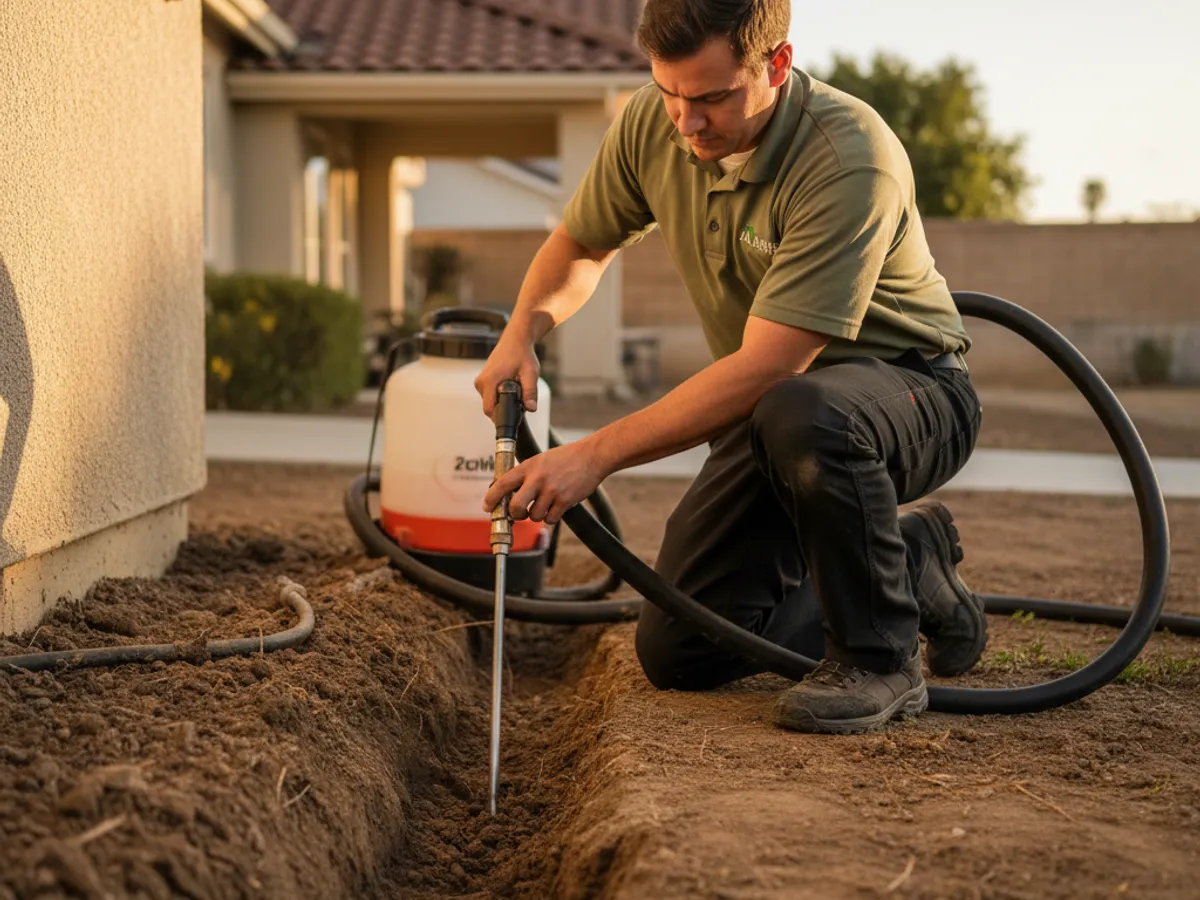
- Subterranean soil treatment, which UC IPM says is for professional use only in California
- Bait systems, which UC IPM says may take several months or even years and need constant monitoring
- Wood replacement, which may need an engineer or contractor and permits when the wood is load-bearing
- Pre-treatment for new construction and remodels
- The guarantee terms, which state law requires the report and the contract to spell out
When do you need termite treatment in San Diego County?
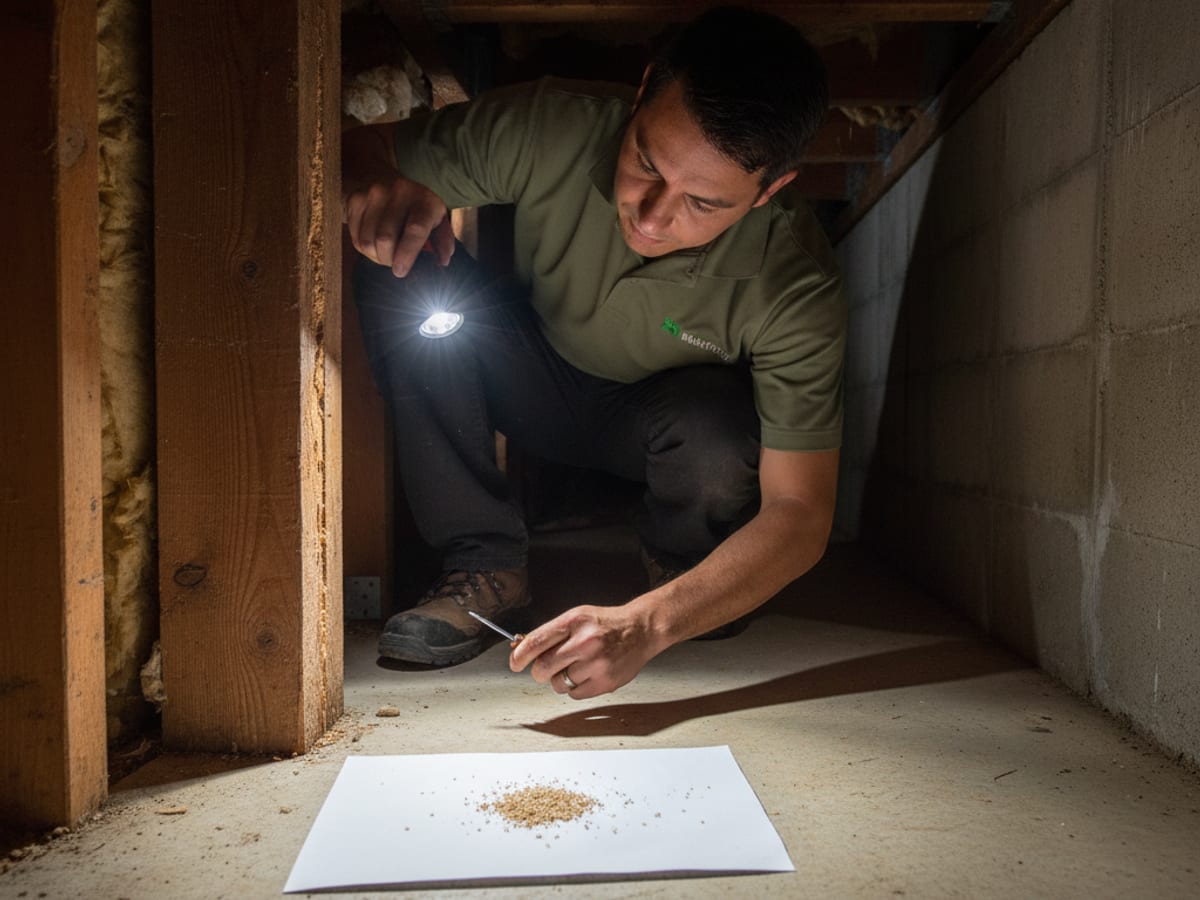
- You see small piles of pellets (frass) on windowsills, baseboards, or in the garage
- Wood sounds hollow when tapped, or a screwdriver pushes into trim easily
- Mud tubes are visible on the foundation, in the crawlspace, or up exterior walls
- Swarmer wings turn up on windowsills or in cobwebs after a swarm
- A WDO report flagged evident infestation or damage and recommended corrective measures
What do homeowners ask about termite treatment in San Diego County?
Drywood vs. subterranean, how do I know which I have?
Drywood termites push fecal pellets out through kickout holes less than 2mm in diameter, and UC IPM says those pellets have six hexagonal sides and are diagnostic for drywood termites. Subterranean termites need soil moisture and build earthen shelter tubes, often called mud tubes, between the soil and the wood. UC IPM also warns that it is not possible to determine, from fecal pellets alone, whether the infestation is currently active, which is why the licensed inspection comes before any treatment recommendation.
Do I really need to tent the whole house?
Not always, and UC IPM lays the trade-off out plainly. A whole-structure treatment treats all infestations at once, accessible and inaccessible, and has an advantage over localized treatments in that it should eliminate all infestations, even hidden ones. Localized treatment is more restrictive and is often applied to a single board or small group of boards, and because detection is imperfect, one can never be sure all infestations have been treated when applying localized treatments. The inspection report is where that call gets made, and state law gives you the right to seek a second opinion from another company.
What should the contract say about a guarantee?
Get it in writing, because state law requires it. Business and Professions Code section 8516 says the report and any contract entered into shall also state specifically when any guarantee for the work is made, and if so, the specific terms of the guarantee and the period of time for which the guarantee shall be in effect. If a guarantee extends beyond three years, the registered company has to keep the original inspection reports, field notes and notices of completion for the whole guarantee period and for a year after it expires. Read those terms before you sign, and ask what a callback costs once the guarantee ends.
Is a termite exterminator the same as termite treatment?
Yes. A termites exterminator, pest control for termites, and termite treatment all describe the same work, and treating termites always starts from the inspection report rather than a phone description. Fumigation for termites is one option that report can point to, used when activity has spread through the structure, while contained drywood activity is often handled with localised injection or heat instead.
How long does termite treatment last?
No source on file gives a general lifespan, and the honest answer is that it depends on the method and on the contract. UC IPM notes that, like fumigants, heat treatments have no residual effect, so neither prevents a fresh infestation later. Its own advice is to read your guarantee carefully and consider an annual inspection service. Because state law requires the guarantee period to be written into the report and the contract, that document is where you get a number you can hold someone to.
Where can you get termite treatment in San Diego County?
Termite Treatment is available in every city and community in San Diego County. Pick your city for local climate notes and service specifics.
See termite treatment in all 67 cities
Need termite treatment in San Diego County?
Call and we match you with a licensed local pro who quotes the job after inspecting.