Rodent control and exclusion in San Diego
Roof rats climb. UC IPM says they usually live and nest aboveground in shrubs, trees, or dense vegetation such as ivy, that indoors they favor attic spaces, walls, false ceilings, and cabinets, and that they prefer warm climates and coastal ecosystems. The County of San Diego says rats can enter through holes the size of a quarter or larger, and mice through holes the size of a dime or larger. Killing the rodents you can see is the easy half. The lasting half is finding and sealing the way in, so trapping and exclusion belong in the same quote.
Last updated: 2026-04-23
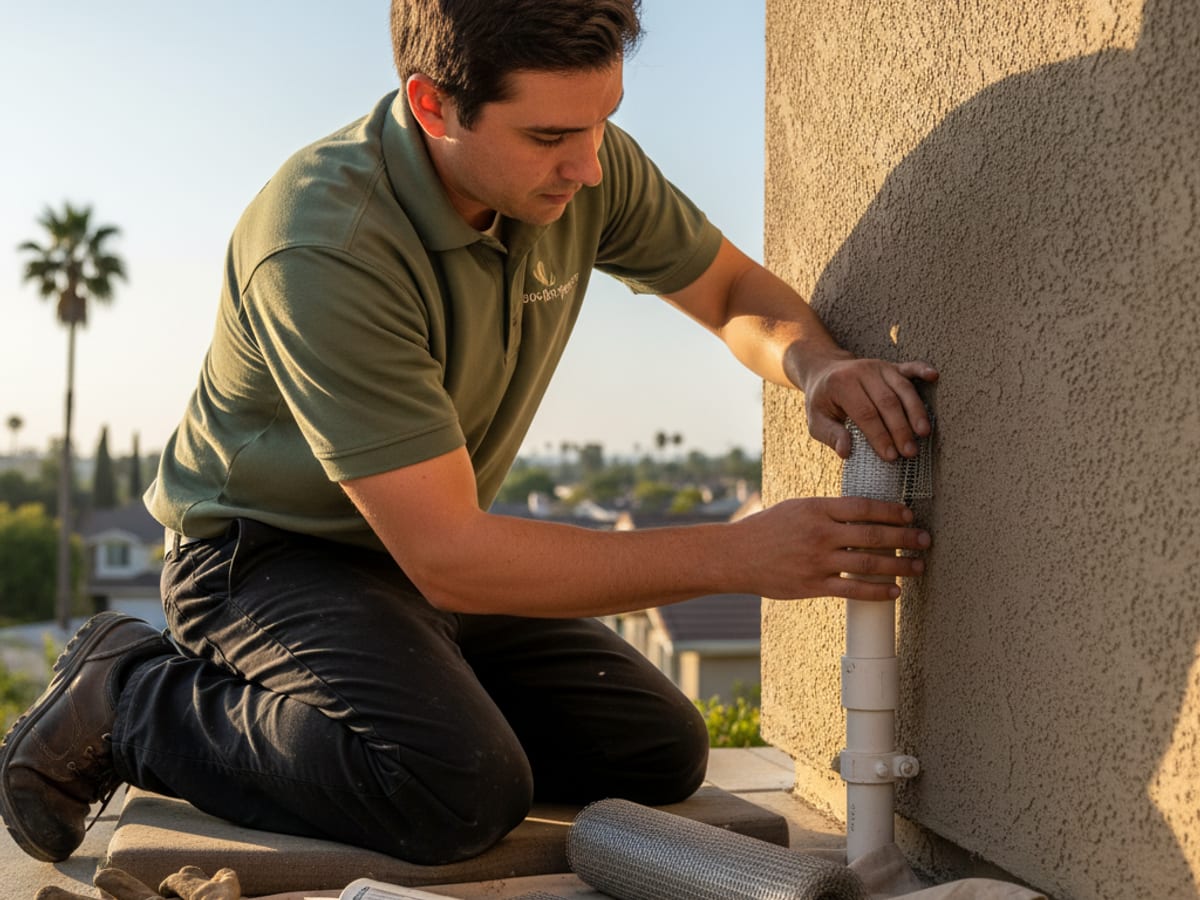
What's included in rodent control in San Diego County?
- Initial inspection of attic, crawlspace, garage, exterior, and roofline for rodent entry points
- Snap traps, which UC IPM calls the safest, most effective, and most economical way to trap rats
- Tamper-resistant bait stations along the perimeter when appropriate
- Exclusion with the materials the County names: 1/4-inch, 18-22 gauge wire hardware cloth, or metal wool and expanding foam
- Roofline and tree work, since the County says to trim trees and bushes to at least 4ft away from the roof
- Attic insulation and droppings remediation when contamination is severe
- Follow-up visits to confirm activity has stopped before closing the job
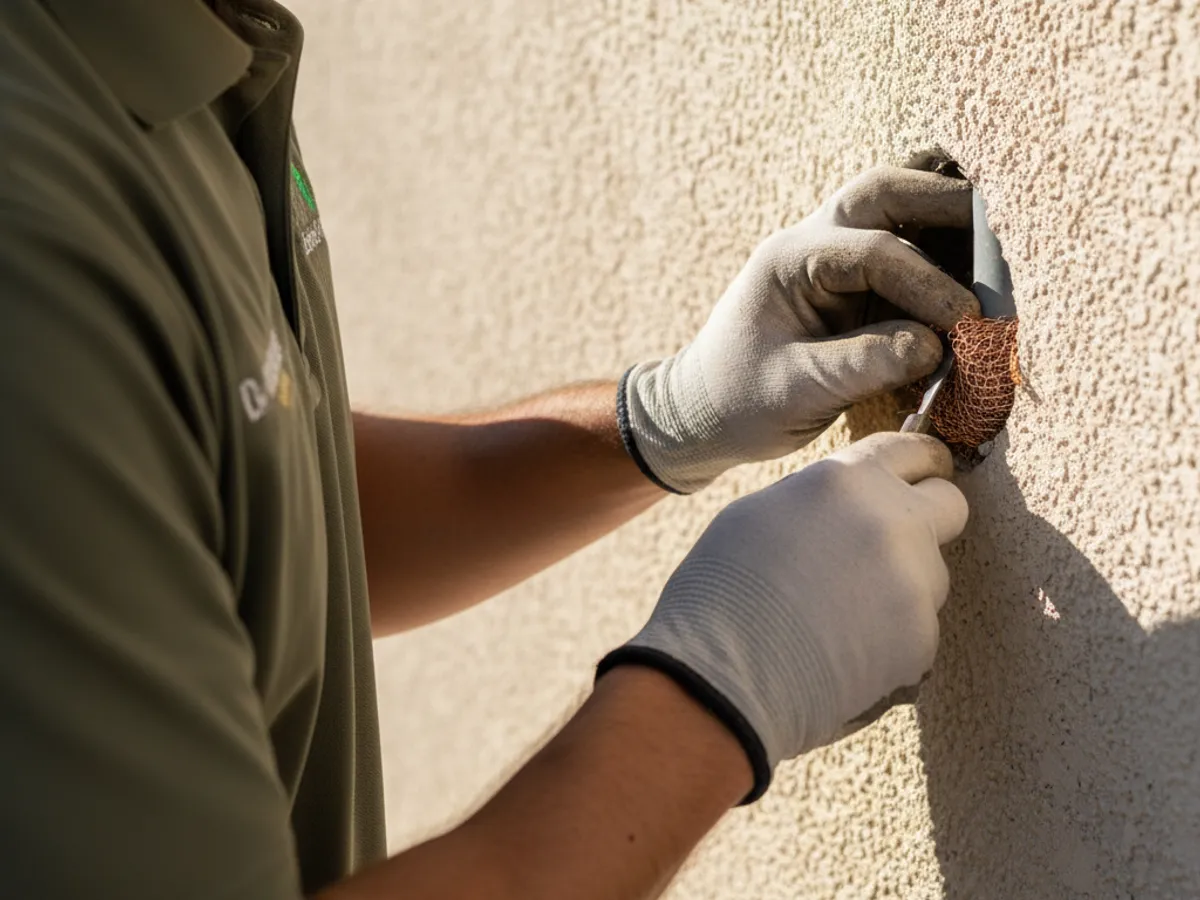
When do you need rodent control in San Diego County?
- You hear scratching, scurrying, or running in the attic or walls at night
- You find droppings (small dark grains) in the garage, pantry, or under the sink
- Pet food disappears overnight or has been chewed through
- Wires, plastic pipe, or cardboard show gnaw marks
- You see a mouse or rat in or near the house, they rarely travel alone
What do homeowners ask about rodent control in San Diego County?
What types of rodents get into San Diego homes?
Roof rats, Norway rats, and house mice are the ones that turn up in homes. UC IPM says roof rats are great climbers with a tail longer than their head and body, and that indoors they favor attic spaces, walls, false ceilings, and cabinets. The stocky Norway rat builds burrows along building foundations, beneath trash piles, or in woodpiles, and indoors they tend to remain in basements or on the ground floor. House mice get through smaller gaps than either. Rodent pest control starts by working out which one you have, because the entry points and the trap placement differ.
Is a rat exterminator the same as rodent control?
Yes, it's the same job. Rodent extermination, rodent extermination services, rodent pest control, rodents pest removal, mice pest control, pest control for mice, an exterminator for mice, pest control for a mouse, a rat exterminator, or a mouse exterminator near you all describe the same visit: trap the active rodents, then seal the entry points so more don't follow. Rodent removal on its own is only half of it. Ask the company you're matched with to quote trapping and exclusion together, because doing one without the other is why infestations come back.
Do you use poison or just traps?
That is a question to put to the licensed company before the first visit, and the answer should be specific. UC IPM says snap traps are the safest, most effective, and most economical way to trap rats, and that traps should be kept out of reach of children and pets. Rodenticide in tamper-resistant exterior stations is a separate decision with its own risks to pets and to the owls and hawks that eat rodents. Ask what is being placed, exactly where, and how it is secured.
How do roof rats get in?
They climb. UC IPM says roof rats are very agile climbers, that they can often be seen at night running along overhead utility lines or fence tops, and that they nest in attics, wall voids and ceiling voids. From there they enter at unsealed roof vents, gable vents, eaves, and the gaps where the roof meets the wall. The County of San Diego's preventive advice is to trim trees and bushes to at least 4ft away from the roof to prevent rats from jumping onto your roof.
Why do I keep getting mice even after I've trapped some?
Because something is letting them in. Trapping reduces the active population but doesn't address the source. Real, lasting rodent control requires finding and sealing entry points, that's the part most DIY efforts skip and why infestations come back.
Do I need to clean up droppings, or do you?
Ask, because it is not automatically included and it varies by company. Light droppings in a garage are one thing. Feces through attic insulation or urine staining is its own scope, often handled by a restoration specialist rather than the pest company, and it needs protective equipment rather than a broom. Get the cleanup written into the quote or written out of it, so nobody is surprised on the day.
Do you do rodent inspections?
Yes, and it is where every rodent job should start. The inspection walks the attic, crawl space, garage, and exterior looking for droppings, rub marks, gnawing, and the actual entry points. Ask for the findings and the plan in writing before any traps go down. It is the difference between guessing where to put traps and knowing how the animals are getting in.
What is rodent proofing?
Rodent proofing, also called exclusion, is sealing the ways in: hardware cloth over vents, sealed gaps where pipes and cables enter, door sweeps, and closed roofline openings. Trapping removes the rodents you have; proofing is what keeps the next ones out. It's the permanent half of the job, and the reason bait-only programs run forever without solving anything.
Where can you get rodent control in San Diego County?
Rodent Control is available in every city and community in San Diego County. Pick your city for local climate notes and service specifics.
See rodent control in all 67 cities
Need rodent control in San Diego County?
Call and we match you with a licensed local pro who quotes the job after inspecting.