
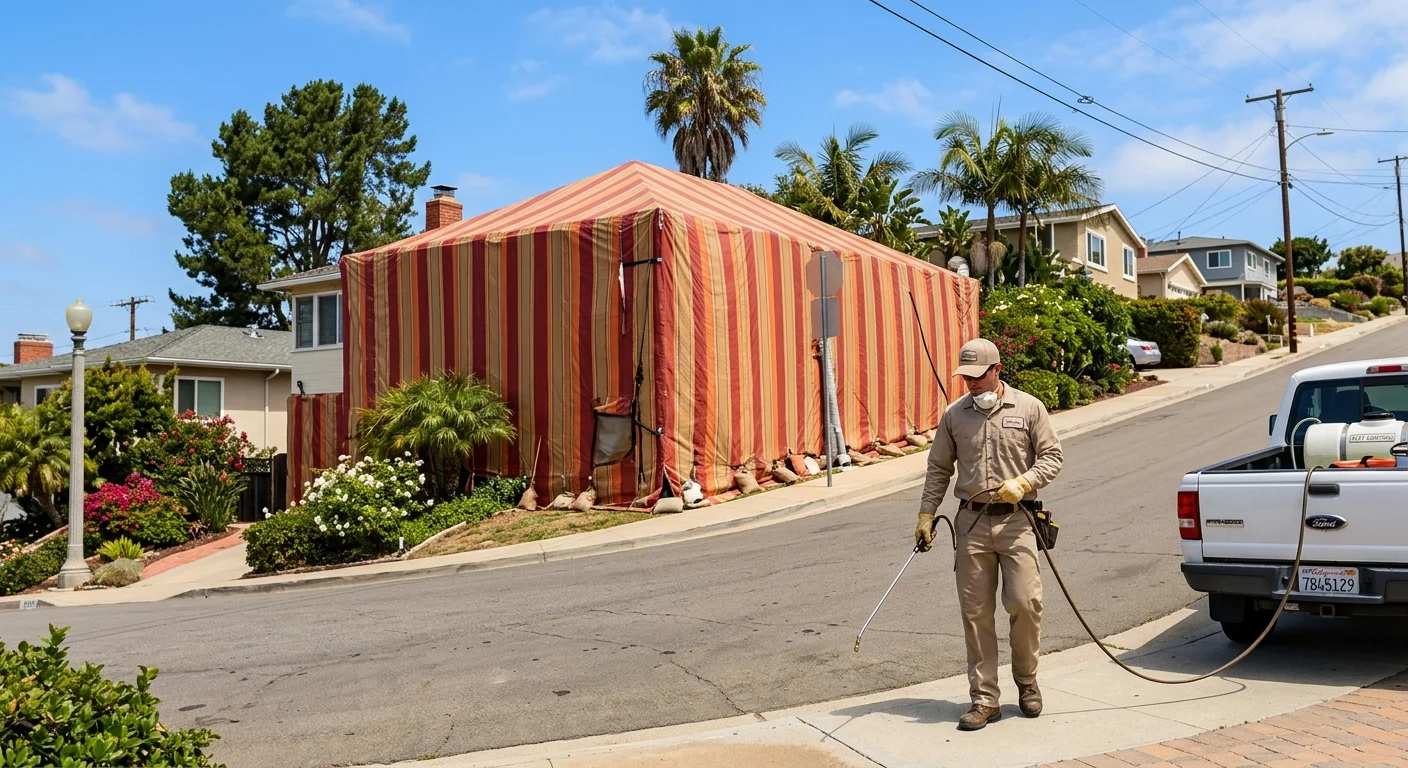
Preparing for termite fumigation means following the fumigator’s written checklist: people, pets, and indoor plants out; unsealed food and medicines bagged or removed; gas service scheduled; keys and access arranged. The manufacturer’s California planning guide and the product label govern the job. Where this page and your fumigator’s packet disagree, use their packet.
If a termite fumigation has been scheduled for your home, the prep work matters as much as the treatment itself. Fumigant gas needs to reach every void inside the structure, and it needs a sealed, empty home to do it safely. Skipping a step doesn’t just risk your own safety, it can also delay the whole appointment if the crew arrives and the home isn’t ready. Here’s the full walkthrough, in the order it actually needs to happen.
The fumigant used for drywood termite tenting is sulfuryl fluoride, with chloropicrin added as a warning agent since sulfuryl fluoride itself has no smell, per the California Department of Pesticide Regulation, which regulates structural fumigation in California. Before the job starts, the fumigation company has to get your signed Occupant Fumigation Notice, also called a pesticide disclosure. The Douglas Products California fumigation planning guide and Vikane general-information sheet are the manufacturer sheets captured for the bagging, watering, mattress-cover, and gas items below. Where any detail here differs from what your fumigation company tells you, follow their written instructions. This page doesn’t override the licensed fumigator’s own checklist or the product label.
What to bag or remove before the crew arrives
Bagging and exemptions are fumigator-specific written instructions. The captured Douglas Products California planning guide says unsealed food, medicines, pet food, and similar consumables must be removed or double-bagged in the special bags the fumigator supplies (Nylofume bags in that guide), and that items in original manufacturer-sealed glass, plastic, or metal jars or cans with the airtight seal intact do not need bagging. Your packet may list additional items. Do not invent a third category, and do not treat “bag everything” as safer than the list you were given. Ask the fumigator about baby mattresses or pillows in waterproof covers: that same guide says open the seal, or remove the item if the cover cannot be opened (built-in air vents do not need to be opened). Confirm it on your sheet.
People, pets, and plants: who has to leave and for how long
Everyone living in the home, including pets, has to be out for the full fumigation period, typically 2 to 3 days and 2 nights depending on home size and the fumigant dose required. This isn’t a partial-day inconvenience. Re-entry only happens after the structure has been aerated and cleared by the fumigation crew, and going back in early is a real safety risk, not just a rule.
Line up lodging before the appointment date, whether that’s a hotel, a friend’s place, or a short-term rental. If you have pets that can’t stay elsewhere, most boarding facilities in San Diego can accommodate a 2 to 3 day stay with enough notice. All potted plants have to come out, including porch plants that would otherwise sit under the tent. That’s not a suggestion: anything under the tent is exposed to the fumigant.
Gas shutoff and utility coordination
In California the manufacturer guide says the gas utility handles shutoff and restoration. Schedule both at least 48 hours ahead, keep the clearance notice on the meter, and do not relight appliances yourself. The fumigator still needs access to the structure.
Inside the home: doors, cabinets, and access
Before the crew tents the structure, every interior door needs to be open, including closet doors, and every cabinet and drawer needs to be unlatched or open enough for gas to circulate. Locked interior doors or sealed cabinets create voids the fumigant can’t reach, which defeats the purpose of a whole-structure treatment. Walk through the house room by room the morning of the appointment and open everything, including attic access panels if you have them.
Watering the soil around the foundation
The California planning guide tells homeowners to water soil up to 18 inches from the outer walls, and around adjacent shrubs, the day before fumigation, to help protect those plants during tenting. The Douglas Products Vikane general-information sheet adds that watering soil around the foundation is recommended to reduce loss of fumigant through the soil and to limit plant-root exposure. Neither sheet says watering is for the tent seal or for even gas distribution inside the house. Confirm the distance and timing on your fumigator’s checklist.
Keys, locks, and the day-of handoff
The crew needs full access to the home, so provide a working key or garage code, and make sure any additional locks, security bars, or alarm systems are either disabled or the crew has the information to bypass them. If a lockbox is being used, confirm the code works before the appointment day rather than finding out when the crew arrives.
What happens before you’re cleared to go back inside
After the treatment period ends, the crew removes the tent and aerates the structure. The licensee tests during aeration and posts a re-entry notice only once the fumigant concentration drops to 1 ppm sulfuryl fluoride or less, the re-entry clearance standard set by the California Department of Pesticide Regulation and restated on the captured Vikane manufacturer sheet. This step isn’t optional, and it’s never a homeowner’s call. Once cleared, the California planning guide says open bagged items in a well-ventilated area and that dishes, linens, and clothing do not need washing because the fumigant is a gas that dissipates. Ask your fumigator if any item on your packet is an exception. Gas restoration is a utility appointment in that California guide, not a DIY relight. For the full picture on when tenting is the right call, see termite fumigation in San Diego.
Who does what
| Task | Homeowner | Fumigator / utility |
|---|---|---|
| Food, medicine, pet food | Bag or remove unsealed items per the written list | Supplies the bags and the Occupant Fumigation Notice |
| People, pets, indoor plants | Out of the structure for the posted period | Posts when re-entry is allowed |
| Waterproof mattress/pillow covers | Open the seal or remove the item | Confirm the item on the prep sheet |
| Soil watering | Water adjacent soil the day before if the packet says to | Not a substitute for their seal work |
| Gas | Schedule shutoff and restoration; keep the meter tag | Utility performs the California shutoff and restore |
| Keys and interior access | Working key, open interior doors | Needs access to every room |
Whole-structure fumigation isn’t the only path for every termite situation. If you’re weighing options before committing to a tent job, our guide on termite treatment without tenting in San Diego covers when localized treatment is enough instead. If you’re weighing the two, reach out here and we’ll get you matched with a licensed pro who can look at your home first.
Frequently asked questions
How much does termite fumigation cost in San Diego?
The cost depends on the size of the home measured in cubic feet, the fumigant dose required, and the extent of the infestation. The fumigation company quotes the job in writing after inspecting the structure, so treat any number you hear before that as a rough estimate.
How long do I have to be out of the house?
Most fumigations require 2 to 3 days and 2 nights out of the home, including pets. The exact duration depends on home size and the fumigant dose the crew determines is needed.
Do I need to shut off the gas myself?
In California, schedule the utility. The manufacturer guide says the gas company handles shutoff and restoration. Keep the clearance notice on the meter.
What do I do with food that’s already sealed?
Follow the exemption list in the fumigator’s packet. Original manufacturer-sealed glass, plastic, or metal jars and cans stay. Bag or remove the rest. Do not invent a third category.
What happens if I go back inside too early?
Re-entry before the crew clears the home is a genuine safety risk, not just a formality. Fumigant gas needs to fully aerate out of the structure, and the crew will confirm when that’s happened before letting anyone back in.
To find out whether your situation needs tenting at all, call (858) 400-6561.