
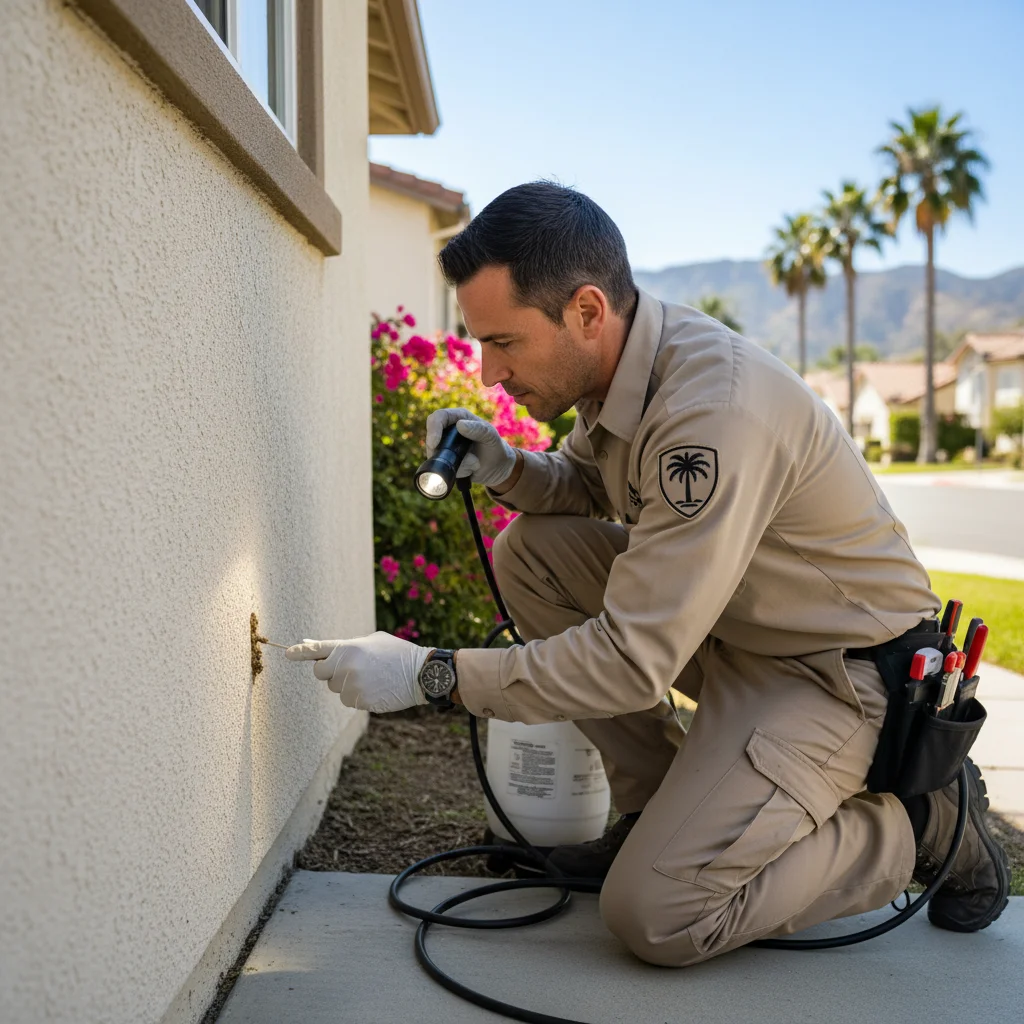
If you’re seeing winged insects crawling or flying inside your house right now, stop spraying and read this. Mississippi State University Extension says finding swarmers inside a building suggests a termite infestation somewhere nearby. UC IPM says seeing flying termites does not always mean the building is infested, and a professional inspection is usually required to confirm. Don’t spray the room. That only kills the few you can see. Collect a couple of specimens, note where they’re coming from, and get matched with a licensed Branch 3 company. Pest Pros San Diego does not send the technician.
A licensed Branch 3 inspection is how you find out whether termite treatment is even the next step. Pest Pros matches that inspection. We do not perform it.
Why swarmers inside your house are a bigger deal than swarmers outside
Termite colonies release winged reproductives, called alates or swarmers, when they’re mature enough to start new colonies, according to UC IPM. Outdoors, a swarm near your yard tells you termites are active in the neighborhood. UC IPM also notes that finding swarming termites in the yard doesn’t necessarily mean the house has termites, because soil often holds buried cellulose. Indoors is a different story: as Mississippi State University Extension puts it, finding swarmers inside a building suggests there’s a termite infestation somewhere nearby. Swarmers that emerge from a window frame, a baseboard, or a light fixture are a location clue for the inspector. Mississippi State also notes an exception for a few Formosan swarmers drawn to lights in a heavily infested neighborhood, so the inspector still has to confirm.
That distinction matters because it changes the urgency. Outdoor swarms near your foundation are worth a call. Indoor swarms are a reason to match a Branch 3 inspection this week, not this month. For full detail on how to tell a termite swarmer from a flying ant in the first place, see our flying ants vs. termite swarmers guide. If you want the full seasonal picture of when San Diego typically sees swarms, that’s covered in when do termites swarm in San Diego.
Getting that right starts with confirming what species you have and where the colony is sitting, which is exactly what an inspection is for.
What to do in the next hour
A few things matter more than others when you’re standing there watching termites come out of your window sill.
Don’t spray the room. Mississippi State says killing the swarmers does nothing to solve the problem. The colony that produced them keeps going unless it is treated. UC IPM says do-it-yourself pesticides against termites are generally not effective. Spray can also make the emergence point harder to find later.
Collect a few specimens. Grab two or three in a small bag or on a piece of tape. A photo helps too, but having actual insects lets a licensed inspector confirm the species on-site instead of guessing from a blurry picture.
Note the exact location. Which window, which wall, which room. If you see shed wings on the sill without live insects, that is still a clue. UC IPM says that after their swarming flight, reproductives shed their wings. UC IPM on drywood termites lists shed wings among inspection signs.
Vacuum the rest. Once you’ve kept a few specimens, vacuuming up the remaining swarmers is fine and keeps kids and pets from tracking them around the house.
Match a Branch 3 inspection. This is the step that actually gets eyes on the wood. Everything above is triage. Pest Pros San Diego is a referral matcher. The Structural Pest Control Board defines Branch 3 as wood-destroying pest work with insecticides or structural repairs, excluding fumigation with lethal gases. We connect you with a registered company. We do not send our own technician.
What the inspection actually finds
A termite inspection isn’t just someone walking around with a flashlight for five minutes. A thorough inspection covers the attic, crawl space or slab perimeter, all exterior wall lines, wood-to-soil contact points, and any areas where you reported activity. The goal is to find the colony’s access point. UC IPM says a professional inspection of the structure is usually required to confirm an infestation.
Whether you need a local treatment or full fumigation depends entirely on what the inspection finds. A single isolated gallery near one entry point is usually treatable locally. Widespread activity across multiple wall lines, or drywood termites established in structural framing, often points toward fumigation as the more reliable fix. Nobody can tell you which one you need over the phone, which is why the inspection comes first.
Why you shouldn’t wait
Termite colonies don’t announce themselves loudly most of the year. A swarm is one of the few visible signals homeowners actually get. Mississippi State University Extension says it takes several years for a termite colony to grow large enough to produce swarmers. If large numbers of swarmers are emerging inside a building, that page says a large colony is feeding on that building. Waiting a few extra weeks after a swarm rarely changes the outcome for the better. It just gives an existing problem more time.
If you caught the swarm early and you’re not sure it’s termites at all, our guide on signs of termites in San Diego walks through the other markers: mud tubes, frass, hollow-sounding wood. Check those while you wait for the matched company.
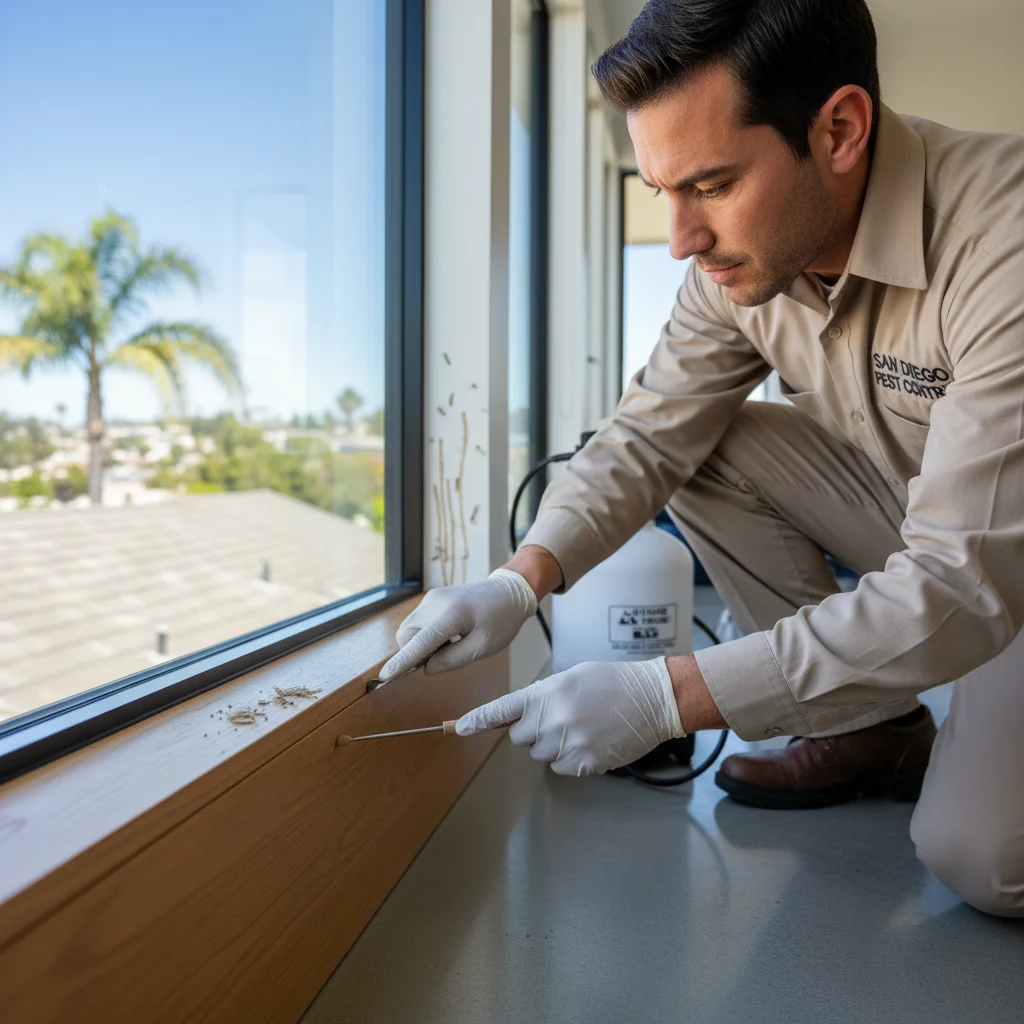
Verifying who you’re hiring
Termite work in California requires a license from the Structural Pest Control Board. Before anyone starts treatment on your home, you can check their license status directly at pestboard.ca.gov. It takes under a minute and it’s worth doing, especially for fumigation work, which involves real safety protocols around tenting and re-entry.
Frequently asked questions
Are flying termites inside my house always a sign of an active colony?
In almost every indoor case it is a reason to inspect, not a reason to wait. Mississippi State says indoor swarmers suggest an infestation nearby. UC IPM says flying termites do not always mean the building is infested. A licensed inspection is how you settle it.
Should I kill the termites I see with spray before the inspector arrives?
You can vacuum or wipe up the swarmers you see after keeping a few specimens for identification. Skip the aerosol spray. It won’t touch the colony and it can make the emergence point harder to locate.
How much does it cost to find out if I actually have termites?
Inspection pricing varies by company and by property. Some companies fold the inspection fee into the cost of treatment if you move forward, and others charge a flat fee regardless. It’s worth asking when you book, but either way the inspection is the only way to know whether you’re looking at a small local job or something that needs fumigation.
What’s the difference between local treatment and fumigation, and how do I know which I need?
Local treatment targets a specific, contained area of activity. Fumigation treats the entire structure and is typically reserved for widespread drywood termite activity found across multiple wall lines or deep in structural framing. The inspector’s findings determine which applies, not guesswork.
I found shed wings but no live termites. Do I still need an inspection?
Yes. UC IPM says reproductives shed their wings after the swarming flight, so wings without visible insects still point to a nearby emergence site. It’s worth having a licensed Branch 3 company look before the trail goes cold.
Seeing winged termites inside your home isn’t something to sit on. Call (858) 400-6561. Pest Pros San Diego matches you with a licensed local company. We do not send the inspector.