
Yellow jacket nest removal needs a licensed pro when insects repeatedly use one opening, the nest is concealed, or people can’t avoid the area. Call sooner when the opening is beside a doorway, walkway, play area, patio, or work zone. If you can’t identify the insect, start with identification rather than treatment.
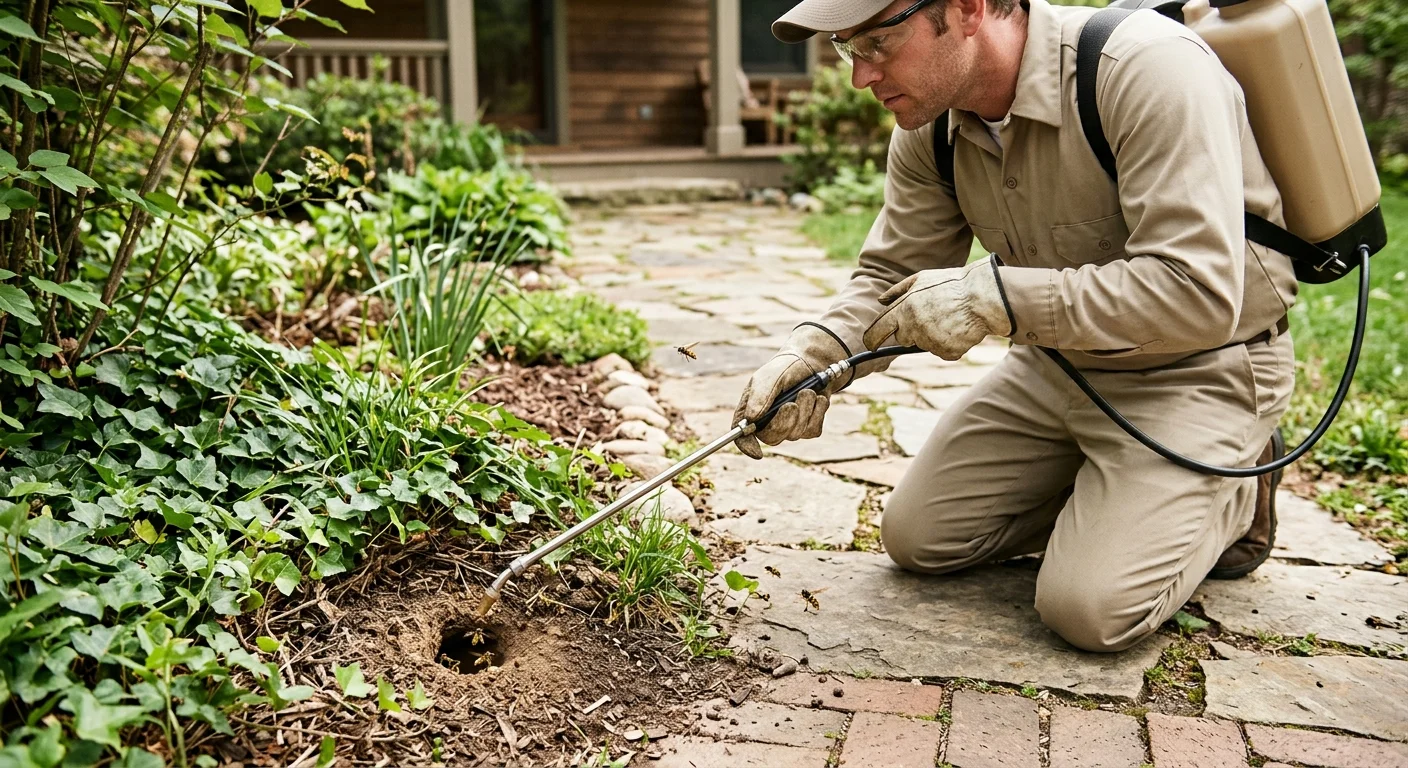
Yellow jackets, paper wasps, and honey bees aren’t the same
Color alone doesn’t settle the identification. Yellow jackets, paper wasps, and honey bees can all appear yellow or brown while moving quickly. The nest shape, entrance, body profile, and flight pattern offer better working clues.
Yellow jackets carry jagged bands of bright yellow on the abdomen and a very short, narrow waist. They nest in holes in the ground, inside wall cavities, or in hanging nests enclosed in gray paper with a single entrance. That repeated traffic into one opening matters more than one insect visiting a drink or flower.
Paper wasps usually look slimmer. Their longer legs can be noticeable during flight. An exposed paper nest may show open cells beneath an eave, railing, or protected overhang.
Honey bees tend to look hairier and less sharply banded. A cluster of bees or steady traffic into a structure needs careful identification. Bee and wasp jobs aren’t interchangeable, so don’t choose a treatment before the species is reasonably confirmed.
Use those traits as visual cues, not final proof. Lighting, distance, movement, and phone-camera blur can all confuse the picture. The UC Statewide Integrated Pest Management Program is a useful identification reference. A licensed company can also examine the insects, nest material, and entry route on site.
Our guide to a wasp nest versus a hornet nest covers more visual differences. If bees remain a possibility, tell the company before the visit. That detail changes who should handle the job and what plan should be discussed.
Why nest location changes the removal plan
A visible nest under an open eave presents a different job from activity disappearing underground. Both differ from insects entering a stucco gap, roof edge, utility opening, or block wall.
Start by observing from a place where you already feel comfortable. Note the exact opening and the direction insects travel. A short phone video can help a company understand the setting before arrival. You don’t need to approach the opening or test how the insects react.
Ground entrances can be easy to miss beside irrigation boxes, walkway joints, slopes, and landscape edges. That matters across inland areas such as El Cajon, Poway, and Alpine, where yards may include dry soil, retaining walls, and uneven grades. Along the I-5 corridor, activity may instead appear around dense landscaping, decks, eaves, and narrow side yards.
A wall opening doesn’t confirm the nest sits directly behind that spot. The visible gap may only be the access route. Likewise, insects seen near a roofline may be using an enclosed space that isn’t visible from below. A licensed pro can assess the route before proposing treatment or opening any part of the structure.
Access also changes the written scope. Ask whether the proposal covers the visible opening, the nest itself, nest material, and any necessary follow-up. If structural access may be required, ask who handles that work and whether it appears in the quote.
For a broader look at nest settings and service choices, read our San Diego wasp nest removal guide. The right plan should match both the insect and the location.
What a licensed pro checks before treatment
The first task is identification. The company should determine whether the activity points to yellow jackets, another wasp, or bees. It should also locate the primary entrance and assess whether more than one opening is involved.
Next comes access. The pro may check soil, eaves, wall gaps, landscape features, utility areas, or other nearby hiding places. Tell the company about earlier products or attempts at the site. That information helps the pro understand what has already changed.
California places general household pest work under Structural Pest Control Board Branch 2. Pest Pros San Diego doesn’t hold that license and doesn’t perform treatments. We match customers with licensed local pest control companies.
You can verify a company through the California Structural Pest Control Board license search. Search the business name and confirm that the record matches the company giving the proposal. Ask the company to explain which credential covers the planned work.
Before treatment, request a written scope. It should identify the target pest, treatment area, access needs, and any follow-up included. If a pesticide will be used, ask what product the company proposes and what written instructions apply to the property. The EPA pesticide safety guide provides general questions consumers can use when discussing pesticide work.
Pest Pros San Diego has no treatment menu or fee schedule. Ask the matched company to inspect and identify first, then quote in writing before any treatment begins. That written plan is the best place to resolve uncertainty about access, removal, and follow-up.
How to compare removal companies
Compare the plan, not only the final number. Two proposals can describe very different work even when both say “yellow jacket pest control.” One may cover a visible entrance. Another may include identification, access to a concealed nest, nest material, and a later check.
Ask each company the same questions:
- What insect did you identify?
- Where do you believe the nest is located?
- Does the quote cover the entrance or the full nest area?
- Could structural access become necessary?
- What preparation does the company require?
- What follow-up is included in the written scope?
- Are any warranty or re-treatment terms written into the agreement?
Don’t assume a verbal mention creates coverage. Warranty and re-treatment terms belong to the pest control company’s own agreement. Read the exclusions and ask for unclear language to be explained before authorizing work.
Check the company name against its license record. Confirm insurance directly with the company. If a salesperson, field representative, or subcontractor will attend, ask which registered company stands behind the proposal.
Experience with the specific nest setting also matters. A concealed ground nest near an Alpine driveway isn’t the same access problem as activity entering a Chula Vista block wall. A roof-edge opening near a Carlsbad patio creates another layout. The company should explain how its plan fits the actual site.
Our wasp and bee removal service connects San Diego County customers with licensed local companies. When you contact us, share the insect description, entrance location, property type, and any photos you already have. We’ll use those details to make a more relevant match.
Frequently asked questions
How do I know if I have a yellow jacket nest?
Watch the traffic. UC IPM’s rule of thumb is that wasps flying directly in and out of a single location are probably flying to and from their nest, and that wasps flying from a hole in the ground or a building indicate a probable nest. Yellow jackets show jagged bands of bright yellow and black with a barely visible waist. Ground- and cavity-nesting yellow jackets tend to defend their nests vigorously when disturbed, while paper wasps are much less defensive and rarely sting humans.
Are underground yellow jacket nests harder to treat?
UC IPM says nest removal for subterranean or cavity-dwelling yellow jackets isn’t practical, because the nests are underground or otherwise inaccessible. Underground nests can be quite a distance from the visible entrance, so a spray might not get back far enough to hit the wasps. Even after dark, and with a formulation that shoots an insecticide stream up to 20 feet, stinging incidents are likely, and agitated wasps may turn up some distance from the entrance the day after a treatment. Hiring a pest control professional will reduce risks to you and your family.
Why are yellow jackets worse in late summer?
Defensive behavior increases as the season progresses, because colony populations become larger while food becomes scarcer. In fall, foraging yellow jackets are primarily scavengers, and they start to show up at picnics and barbecues, around garbage cans, at dishes of dog or cat food placed outside, and where ripe or overripe fruit is accessible.
How do I verify the company treating the nest is licensed?
Check the business name against the California Structural Pest Control Board record at pestboard.ca.gov and confirm the record matches the company giving you the proposal. Confirm insurance directly with the company, and ask which credential covers the planned work if a subcontractor is involved.
When to call us
Call when the insect identity is uncertain, the nest is concealed, or regular activity crosses a doorway, walkway, patio, or work area. Yellow jacket nest removal needs a licensed pest control pro when identification, access, and treatment must be coordinated.
Call us at (858) 400-6561 and we’ll match you with a licensed local pro.