
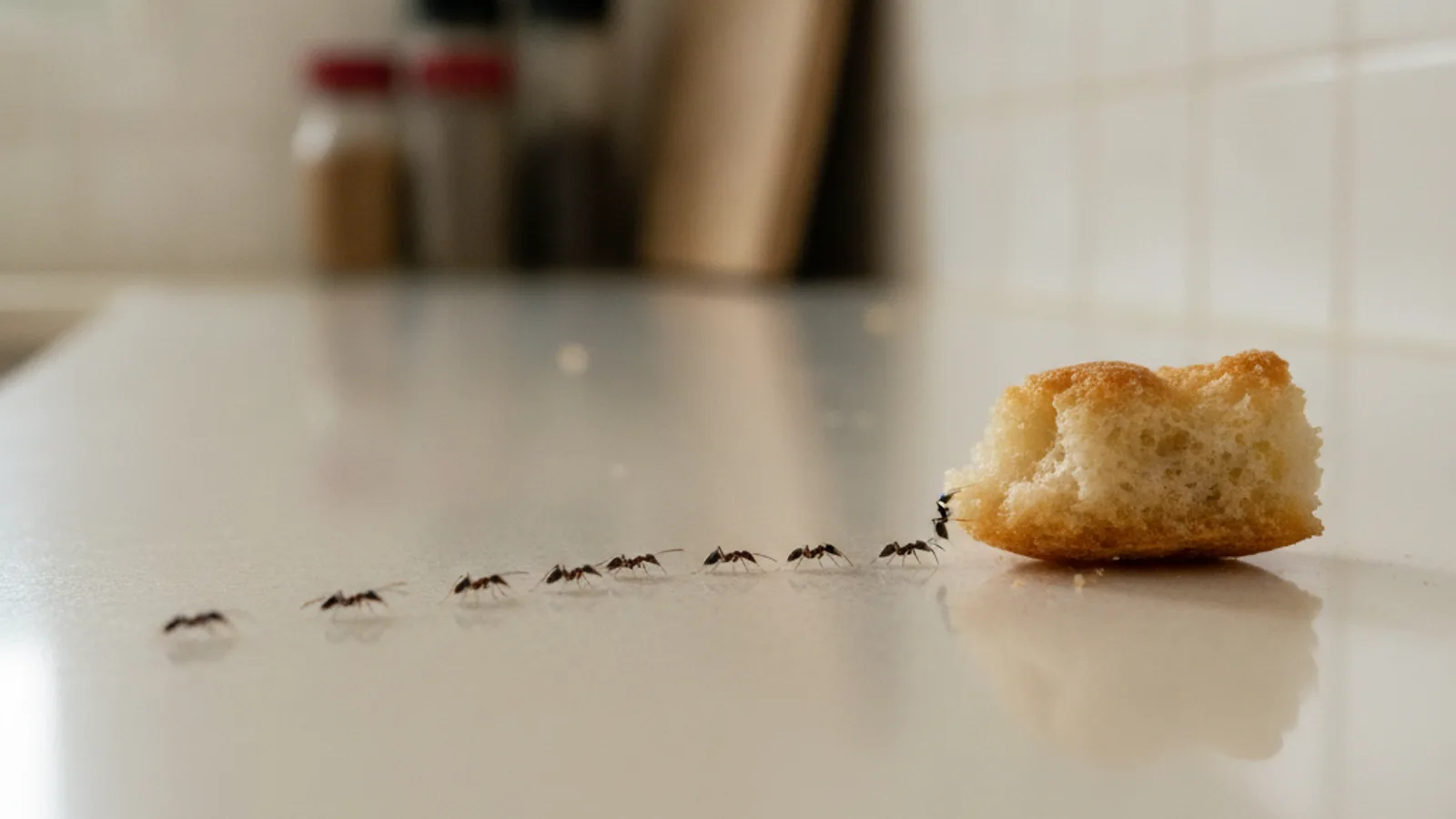
There is no sourced one-time treatment that keeps ants out of a San Diego house forever. UC IPM says most ants live outdoors, so the job is keeping them from entering. Combine caulking, cleaning up food, fixing leaks, keeping plants and mulch off the foundation, and baiting only when needed. Indoor sprays do not stop more ants from coming in.
If ants are already trailing indoors, read the ant treatment guide for the active-infestation questions. Colony mechanics for Argentine ants sit on Argentine ants in San Diego. This page is the exclusion and sanitation work you can keep doing.
Why ants return
UC IPM names the Argentine ant, Linepithema humile, as the most common ant in and around California houses and gardens. Argentine colonies are not separate. They are linked into one large supercolony with multiple queens. Newly mated queens disperse with workers rather than founding nests alone. That is why knocking down a kitchen trail does not end pressure from the yard next door.
UC also says spraying ants indoors with pesticides will not prevent more ants from entering. Outdoor pyrethroid sprays on hard surfaces and around the foundation pollute waterways and are not the exclusion plan. If you hire a company, UC’s question to ask is whether they will use baits and spot treatments rather than perimeter treatments or monthly sprays. There is no sourced quarterly barrier schedule on this page.
Seal the entry points
UC’s first structural step is to caulk cracks and openings that give ants a path indoors. Ants prefer to trail along wires and pipes, so check those penetrations as well as foundation and wall cracks. Walk the exterior and look at:
- Caulking around windows, door frames, and pipe or cable penetrations
- Gaps where the foundation meets stucco or siding
- Openings around weep holes and expansion joints
- Cracks in walkways or patio slabs that lead to the house
A tube of exterior caulk closes easy paths. It does not remove a nest in the landscaping.
Fix moisture and leaks
UC tells you to monitor moist areas and to fix leaky faucets and sprinkler heads because they attract thirsty ants. Check outdoor spigots, irrigation heads near the foundation, AC condensate lines that drain against the house, under-sink plumbing, and standing water in gutters.
Keep food sealed and counters clean
Scouts recruit once they find food. Store pantry items in sealed containers, wipe counters after cooking, and pick up pet food rather than leaving it out. UC says to clean up food sources and to wash or vacuum trails with soapy water, which removes the scent trail, especially at entry points.
Manage landscaping and irrigation
UC IPM: keep plants, grass, and mulch at least a foot away from the foundation to reduce foraging and nesting. A later note says keep plants, grass, and mulch several inches away because those materials provide nesting sites. Trim vegetation back from the wall, keep mulch from piling against it, and stop irrigation from soaking the soil right next to the house. Outdoor nests may sit with plants that host honeydew-producing insects. Avoid planting those shrubs against the building, or manage the honeydew insects.
What a licensed visit is for
Exclusion and sanitation reduce the invitation. They do not guarantee an empty house. If indoor trails keep returning after you have sealed gaps, cleaned, and fixed leaks, ask a licensed company to inspect and put a written plan on paper. The matched company chooses products from the current label. Pest Pros San Diego matches you with that company. It does not apply a perimeter for you.
For what drives a written quote, see ant control cost in San Diego. Service scope lives on ant control.
Frequently asked questions
Can I keep ants out permanently with DIY only?
No sourced method promises a permanent, one-time result. UC IPM’s program is ongoing: caulk, clean, fix leaks, manage plants and mulch, and bait when there is a problem. That combination reduces entry. It does not erase a supercolony in the neighborhood.
Why do ants keep coming back after I spray them myself?
UC IPM says indoor pesticide sprays will not prevent more ants from entering, and that sprays only provide temporary control. Slow-acting baits are the tool that can reach the nest because workers carry them home. Soapy water removes the trail you can see.
How often should a maintenance treatment happen?
This page does not prescribe a licensed barrier schedule. UC advises against treating perimeter sprays or monthly sprays as the default hire. Ask the matched company what it recommends after it sees the property, and get that in writing.
Does sealing entry points alone stop ants?
Caulking stops easy access. UC still pairs it with food cleanup, moisture repair, and keeping plants and mulch off the foundation. Use all of those together.
What does an ant treatment cost in San Diego?
There is no national cost guide on this page. A licensed company inspects and puts a number in writing before work starts. Size of the property, how far trails have spread, and whether work is interior, exterior, or both all change the quote. See our ant control cost guide.
Call (858) 400-6561 to get matched with a licensed local company.