
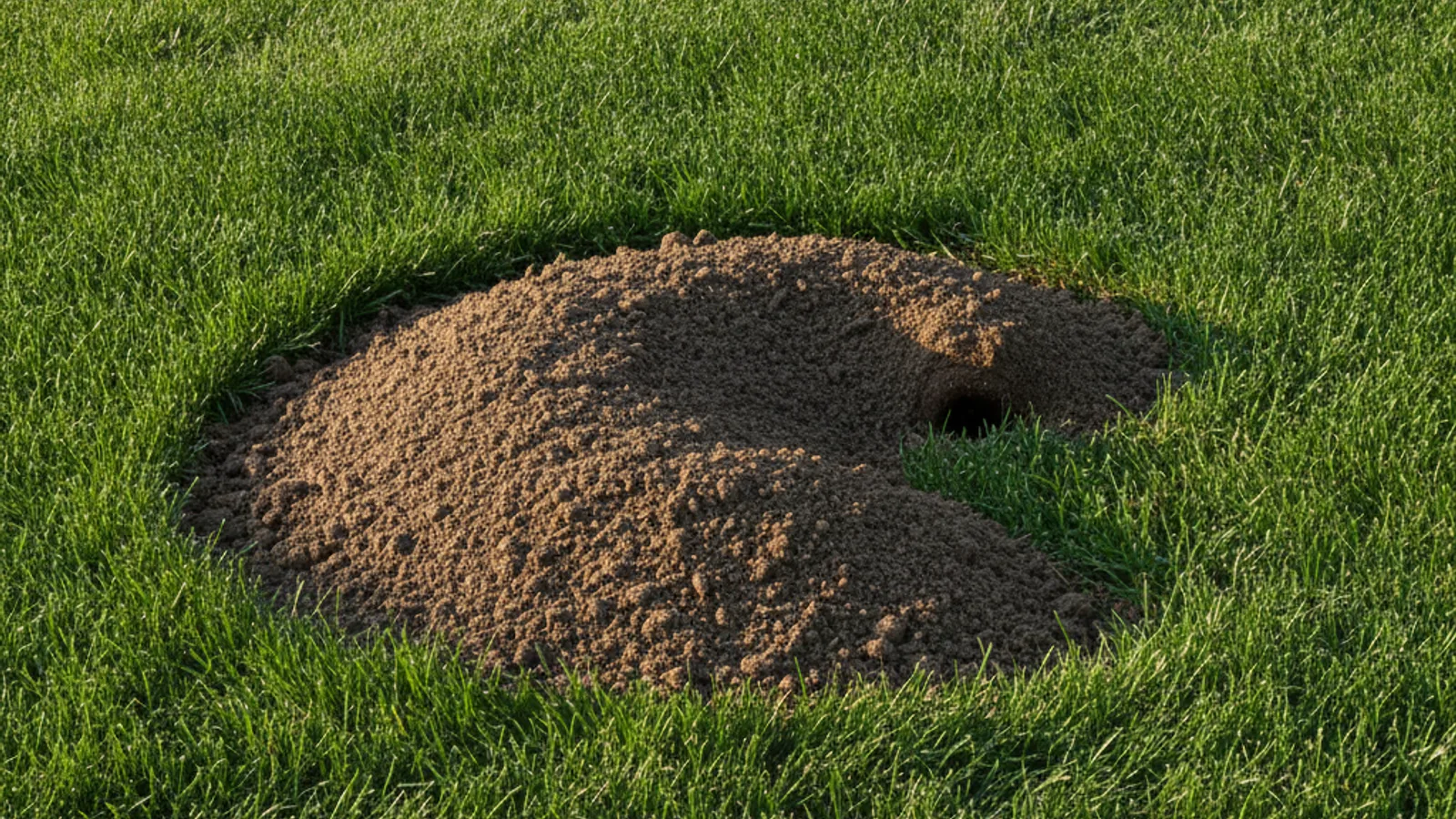
Fixr, a national cost guide updated January 31, 2025, puts gopher removal at $300 to $600 with a national average of $400. Fixr describes that average as what a homeowner spends to remove 3 to 4 gophers by setting traps and doing moderate repairs for yard damage, and it prices gopher trapping on its own at $200 to $600. Those are national benchmark figures, not San Diego quotes and not our prices. We don’t set prices, don’t inspect, and don’t trap. Use the range to sanity-check a quote, then get the real number in writing from the licensed company that walks your yard.
Gopher pricing confuses people because very different numbers circulate online for what sounds like the same job. Knowing what each number actually covers is the difference between a real budget and a surprise invoice. If you want the trapping method itself explained step by step, our how-to guide to getting rid of gophers in San Diego covers that in detail. This page stays focused on what the job actually costs. For the full service scope, see our rodent control page.
What does gopher removal cost in San Diego?
| Line item | Fixr national figure (updated Jan 31, 2025) | What Fixr says it is |
|---|---|---|
| Gopher removal, overall | $300-$600, national average $400 | Fixr’s average is a homeowner spending $400 to remove 3 to 4 gophers by setting traps and doing moderate repairs for yard damage |
| Gopher trapping | $200-$600 | Fixr’s stated average cost of gopher trapping |
| Gopher fumigation | $300-$1,000 | Fixr says this depends on the infestation and tunnel size |
| Your yard | Quoted on-site, in writing | Neither we nor a national guide can price your property sight unseen |
These are Fixr’s national figures as of its January 31, 2025 update, not Pest Pros San Diego’s own prices. We have no price list. The licensed company you’re matched with inspects your yard first and quotes the job in writing before any treatment begins.
Why you’ll see two completely different price ranges
Search “gopher removal cost” and you’ll find a per-animal number sitting next to a whole-job number, and neither one tells you much on its own. Fixr’s own figures show the spread inside a single guide: $300 to $600 overall with a $400 average, $200 to $600 for trapping, and $300 to $1,000 for fumigation. Fixr also puts its low end at $50 to bait and remove one gopher and its high end at $800 to use fumigants on 5 to 6 gophers with substantial yard repair. Same guide, same day, an enormous range, because the jobs behind those numbers are not the same job.
Mound count is a poor proxy for gopher count. UC IPM says a single gopher can create several mounds a day, and that fresh mounds are the sign of an active gopher. So a yard full of mounds is not automatically a yard full of animals, and a quote priced per animal and a quote priced per yard can land in very different places. When you compare two quotes, make each one tell you what it is counting.
What changes the price of gopher trapping
Property size and tunnel complexity drive most of the variation. A small, flat backyard with one or two visible mounds is a faster job than a larger lot with mounds scattered across multiple zones, since each active tunnel segment needs its own trap placement and check.
What’s next door matters too. UC IPM is direct about it: if your property borders wildlands, vacant lots, or other areas that serve as a source of gophers, you can expect gophers to reinvade regularly. That applies to a yard backing onto open space in Ramona as much as anywhere else, and it’s the reason to ask about monitoring after the initial work rather than assuming one pass is the end of it. UC IPM also advises levelling all existing mounds after a control program and clearing weeds and garden debris, so fresh mounds are easy to spot.
Access and terrain play a smaller but real role. Setting traps takes longer on sloped ground, in yards with heavy irrigation lines, or around hardscape that limits where a trap can sit.
What to ask before you hire anyone
Ask what the number is counting: one animal, one visit, or the whole yard until it’s clear. Ask how many follow-up checks are included and what happens if new mounds appear a few weeks later. If your yard borders open space, ask directly whether monitoring is part of the quote or billed separately. Ask which method the quote assumes, since Fixr prices trapping and fumigation differently. And get it in writing after someone has walked the property, not over the phone.
Verify the license before anyone sets foot on the yard. California structural pest control is split into three branches, and general household pest work, which is where vertebrate pest jobs like this are commonly handled, is Branch 2: the practice relating to the control of household pests excluding fumigation with poisonous or lethal gases. Fumigation with poisonous or lethal gases is Branch 1. Look the company up at pestboard.ca.gov. Cancelled licenses and registrations do not appear in the search results, so contact the Board directly if a record comes up empty.
If you’re not even sure it’s a gopher causing the mounds, our gopher versus mole comparison for San Diego walks through how to tell the two apart before you pay for the wrong service. And if you’re trying to plan ahead for what else tends to show up this time of year, the San Diego pest season calendar is a good place to check.
Getting an accurate gopher removal quote
Pest Pros San Diego connects homeowners across the county, including yards near Poway, with local licensed exterminators who inspect the property before pricing the job, rather than quoting a number sight unseen. To get your yard mapped and priced properly, reach out here or call (858) 400-6561 for an inspection.
Frequently asked questions
How much does gopher removal cost in San Diego?
Fixr, a national cost guide updated January 31, 2025, puts gopher removal at $300 to $600 with a national average of $400, and describes that average as removing 3 to 4 gophers by setting traps and doing moderate repairs for yard damage. Fixr prices trapping alone at $200 to $600 and fumigation at $300 to $1,000. Those are national figures, not San Diego prices and not ours. Your yard gets quoted on-site, in writing.
Why do gopher quotes vary so much?
Because they price different things. Some quotes count animals removed, some count visits, some count the yard until it is clear, and the method changes the number as well: Fixr separates trapping at $200 to $600 from fumigation at $300 to $1,000. Mound count will not settle it for you either, since UC IPM says a single gopher can create several mounds a day. Comparing two quotes without knowing what each one counts is how people end up surprised by the final bill.
Do I need recurring gopher service, or is one program enough?
Ask, rather than assume. UC IPM says that once you have controlled pocket gophers, you should monitor the area regularly for reinfestation, and that if your property borders wildlands, vacant lots, or other areas that serve as a source of gophers, you can expect gophers to reinvade regularly. It also notes that it is easier, cheaper, and less time consuming to control one or two gophers than to wait until the population builds up to the point where they cause excessive damage, which is an argument for checking rather than for a standing contract.
What makes gopher trapping cost more on some properties?
Property size, the number of active tunnel segments, terrain, and the method all add time and cost. Sloped yards, heavy irrigation lines, and hardscape limit where a trap can sit. A property bordering open space also carries the reinvasion pressure UC IPM describes, which is a monitoring question to raise while the quote is being written.
How do I know if it’s actually a gopher and not a mole?
Look at the mound. UC IPM says to look for mounds of loose dirt that are half circles with a plugged hole that is off to one side of the mound, and that in contrast to gopher mounds, mole mounds are circular with a plug in the middle, while ground squirrel holes are unplugged without a mound. Our gopher versus mole guide goes through it so you’re not paying for the wrong treatment.
For a real number instead of a guess, call (858) 400-6561 to get matched with a licensed local pro.