
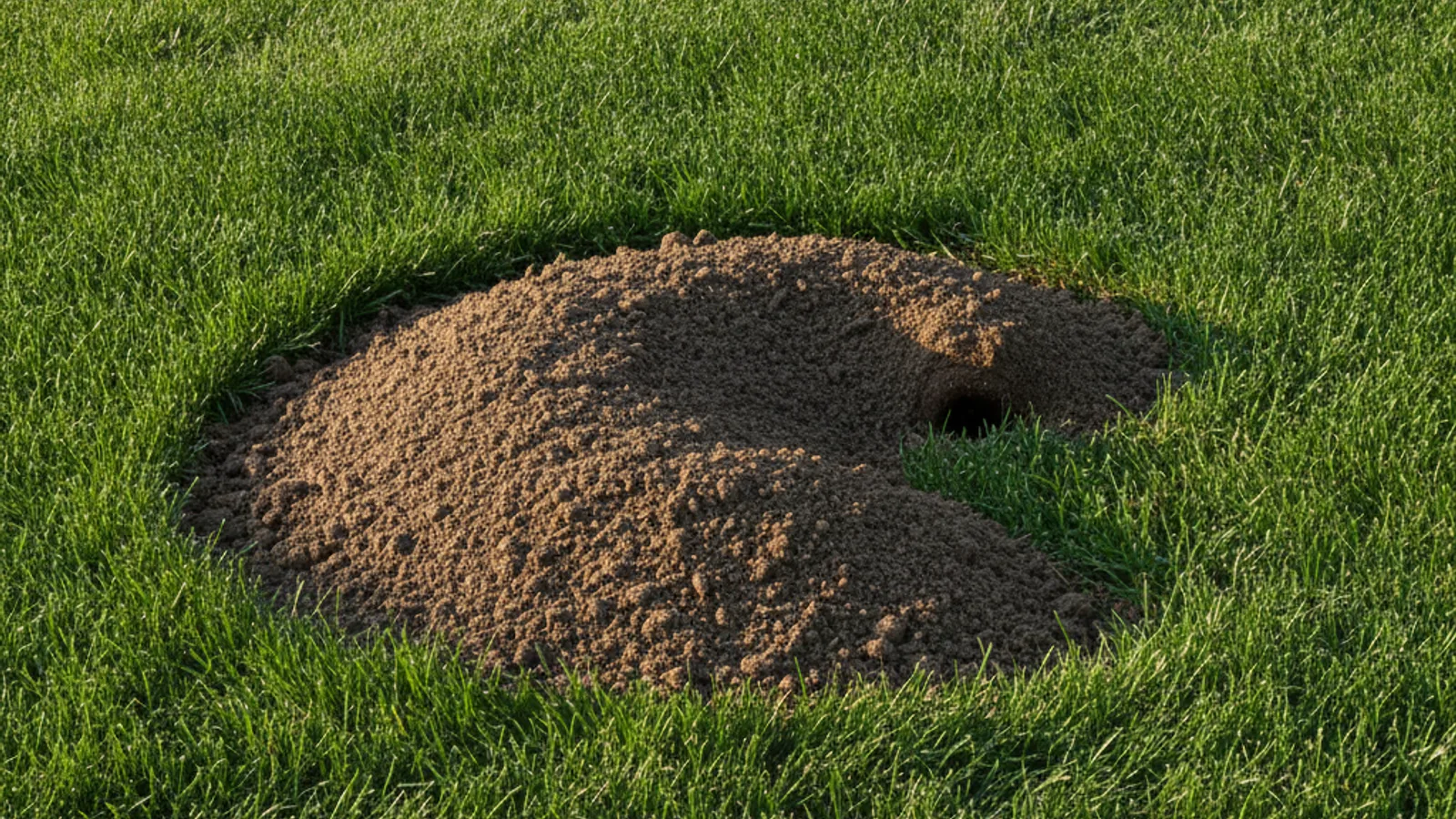
If something is pushing mounds up in your San Diego yard, check the mound before you assume it’s a mole. UC Statewide IPM calls Botta’s pocket gopher the most widespread pocket gopher in California, and gophers are the ones that damage plants. The fastest way to tell them apart is the mound shape: gophers leave a crescent or fan-shaped mound with a plugged hole off to one side, moles leave a round volcano-shaped mound plus raised ridges across the lawn where they’ve tunneled just under the surface. If your plants are getting pulled down and eaten from below, it’s a gopher.
Once you’ve confirmed which animal you’re dealing with, the trapping method is different for each and covered in its own guide, this post stays focused on identification. If it turns out to be a gopher, our step-by-step gopher removal guide covers the trapping process in detail, and it falls under our rodent control service.
Why this matters
Gophers and moles get lumped together because they both leave dirt mounds and tunnels in a lawn, but they’re different animals with different diets, different damage patterns, and different treatment approaches. Treating a gopher problem like a mole problem, or the reverse, wastes time and money. Getting the ID right first is the whole point of this post.
Mound shape is the fastest tell
This is the single most reliable field sign, and you can usually check it without disturbing anything.
Gopher mounds are crescent or fan-shaped, built up on one side with a plugged entry hole visible off-center, usually to one side of the mound rather than dead center. Gophers push soil out at an angle as they dig, which is what creates the crescent shape.
Mole mounds are round and cone-shaped, closer to a small volcano, with the entrance typically at the center rather than off to the side. Moles push soil straight up as they excavate, which builds a more symmetrical pile.
Diet and damage tell you the rest
Gophers are herbivores. They eat roots, bulbs, and the base of plants, and they’ll pull entire plants down into the tunnel from below to get at the root system. If you’re finding wilted or missing plants, especially ones that seem to have been yanked downward, that’s a gopher signature, not a mole one.
Moles eat grubs, earthworms, and other insects living in the soil. They have zero interest in your plants and don’t damage them directly, though their tunneling can loosen roots as a side effect. If your lawn has tunnels but your plants are untouched, that points toward mole activity, or toward a lighter gopher presence that hasn’t reached the plant roots yet.
Surface tunnel ridges are a mole-specific sign
Moles tunnel close to the surface while hunting for grubs, which leaves raised, ridged lines across the lawn where the ground has been pushed up from below. Gophers tunnel deeper and don’t create this surface ridging in the same way. If you see raised, snaking lines across the grass in addition to mounds, that’s the clearest mole-specific evidence. UC Statewide IPM describes these surface tunnels as ridges the mole pushes up by forcing its way through the soil, which is something gophers don’t produce in the same way.
Other clues worth checking
A few secondary signs can help confirm what the mound shape already suggests. Fresh mounds appear overnight or within a day or two, gophers are steady diggers and will keep pushing new mounds up in the same general area over time, while a mole’s mounding activity tends to slow once it’s cleared a section of soil of the grubs it’s after. Timing matters too. Gopher activity in San Diego runs year-round since the ground rarely freezes, while mole activity tends to track with irrigation and grub season, since that’s what draws them in.
It’s also worth ruling out voles, which leave shallow surface runways through grass rather than mounds. If you’re seeing worn paths through the lawn without any raised dirt piles, that’s a different animal entirely and not covered by gopher or mole treatment methods.
Quick reference
| Sign | Gopher | Mole |
|---|---|---|
| Mound shape | Crescent or fan-shaped, off-center hole | Round, volcano-shaped, centered hole |
| Diet | Roots, bulbs, plant bases | Grubs, earthworms, insects |
| Plant damage | Yes, plants pulled down and eaten | No direct plant damage |
| Surface tunnel ridges | Rare | Common |
| Damages plants | Yes, roots and bulbs eaten | No, feeds on grubs and worms |
Why gophers are the more common yard problem here
The pocket gopher you’re most likely to run into here is Botta’s pocket gopher, which UC Statewide IPM calls the most widespread pocket gopher in California. Moles do occur in California, but they feed on worms and insects rather than roots, so they concentrate where soil stays moist and invertebrate-rich, which in a dry-summer county usually means heavily irrigated turf. Gophers have no such limit, they eat the plants themselves. So before you treat for a mole, look at the mound shape and check whether anything is eating your plants. Those two signs settle it faster than guessing.
Frequently asked questions
Can I have both gophers and moles in the same yard?
It’s possible, though the two leave different signs. Check the mound shape and whether plants are being pulled down from below before assuming you have both. Mixed surface signs usually resolve once you look at the mounds directly.
Do gophers and moles use the same traps?
No. Trap placement and type differ because the animals tunnel differently and respond to different triggers. Confirming the ID first is what makes a trapping plan actually work. See our gopher trapping guide for the gopher-specific method.
Will a mole eventually damage my plants if I leave it alone?
Not directly. Moles don’t eat plants, though their tunneling can occasionally disturb root systems as a side effect. If you’re seeing real plant damage, that’s a strong sign it’s a gopher rather than a mole.
How much does professional gopher trapping cost in San Diego?
It depends on the size of the property, how many tunnel runs are active, and the terrain. For a full cost breakdown, see our gopher removal cost guide.
What if I’m not sure even after checking the mounds?
A professional inspection can confirm the species from the tunnel pattern and damage on-site, which is the fastest way to stop guessing and start the right treatment.
Call (858) 400-6561 to get matched with a licensed local pro who can confirm what’s tearing up your yard.