
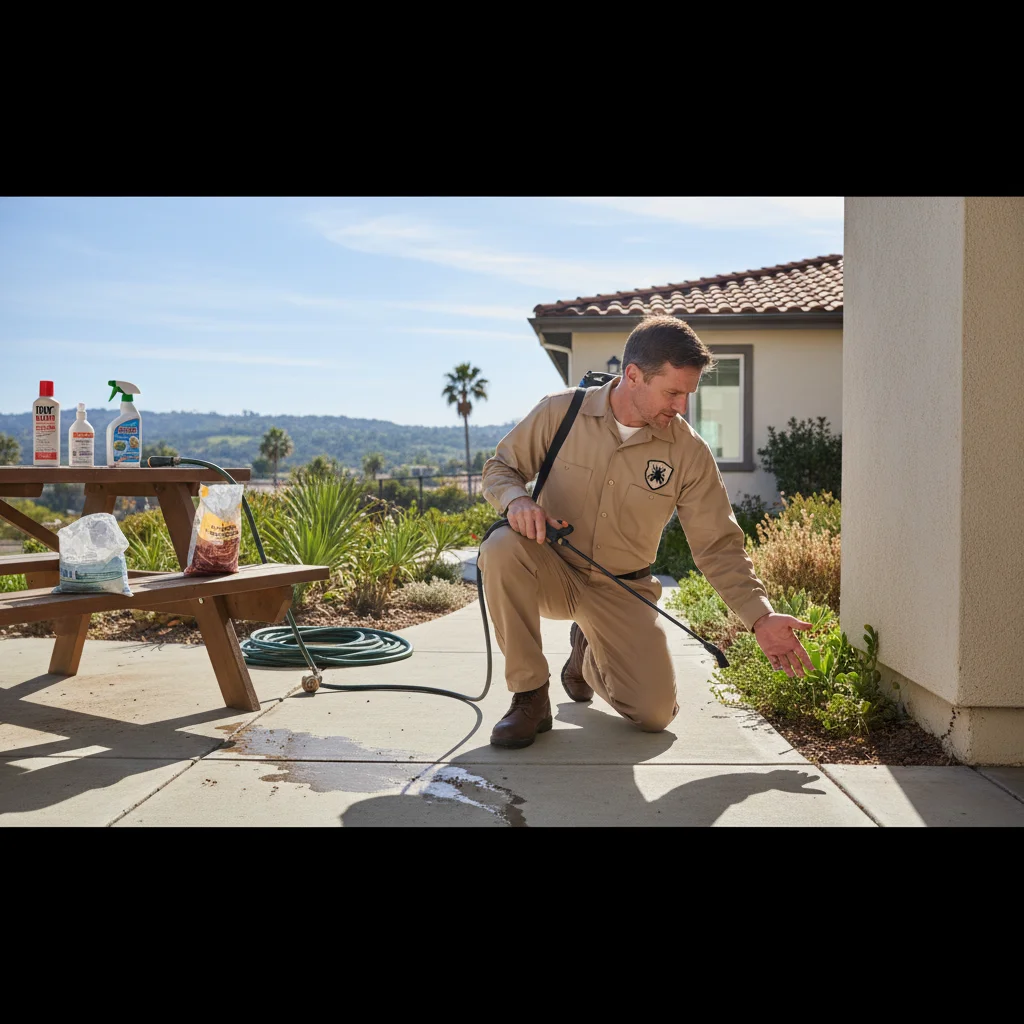
A sudden ant trail that seems to appear overnight is a foraging line, not proof of a named species. Photograph the ants, then check weather, water, and food. UC IPM says ants often enter buildings seeking food and water, warmth and shelter, or refuge from dry, hot weather or flooded conditions, and they may appear suddenly if other food sources become unavailable or weather conditions change. Wipe the trail with soapy water, seal the entry if you can find it, and use bait only as the product label allows. Do not treat spray as a colony solution. If the trail keeps returning, a licensed local company inspects and quotes in writing before any treatment starts.
If soapy water and sealing don’t hold, ant control is the next comparison step.
Why this happens so fast
If you went to bed with a clean kitchen and woke up to a visible ant trail, it can feel like it came out of nowhere. What changed is usually access to food, water, or shelter, plus a trail other workers can follow.
UC IPM calls the Argentine ant the most common ant in and around the house and garden in California. That is a screening fact, not a diagnosis of the ants on your counter. Compare size, color, and trail behavior with UC IPM’s Argentine ant description (about 1/8 inch, dull brown, one node) before you assume the species. Other household ants occur in California too.
Triggers worth checking, without treating any one of them as certain:
Rain and wet soil. UC IPM lists flooded conditions as a reason ants enter buildings.
Heat and dry spells. UC IPM lists dry, hot weather. Indoor leaks, pet water, and condensation are the moisture sources to inspect.
A food or water find. Once workers recruit to a source, a thin scout line can become a visible trail.
A cooler indoor/outdoor contrast. UC IPM lists warmth and shelter. That is a hypothesis to check, not a measured overnight temperature rule.
Full background on Argentine ants, if your specimens match, is in our ant control guide for San Diego.
What not to do
Do not start with a repellent spray as the plan. UC IPM states that spraying ants indoors with pesticides will not prevent more ants from entering, that pesticide sprays only provide temporary control, and that baits are the insecticide type recommended in most situations because they must be slow-acting so workers can return to the nest.
This page does not claim that spray causes Argentine ant colonies to bud, split queens, or spread by the same mechanism described for fire-ant mounds. Contact spray can kill visible workers and interrupt a bait trail. That is enough reason to wipe with soapy water instead of spraying while you identify the ants.
If you already sprayed, read why spraying Argentine ants can make the problem harder as a related decision page, not as proof of a budding event in your walls.
What to do right now
Photograph or collect a few workers on a pale surface before you wipe the trail. Identification comes before product choice.
Wipe the visible trail with soapy water. UC IPM: clean up invading ants with a sponge and soapy water as soon as they enter to remove the scent trail they leave behind.
Find and seal the entry point. Follow the trail to a wall, window, weep hole, or utility penetration. UC IPM: identify where they are entering and seal with caulk.
Use bait only if the label covers the ants and the site. UC IPM notes that bait products need to be slow-acting so foraging ants have time to carry the product back to the nest. Follow that product’s directions. Do not mix homemade bait.
Stop experimenting when the trail returns after correct label use. Recurring trails point to outdoor nesting and entry routes a licensed inspection can map.
What to ask if you call a company
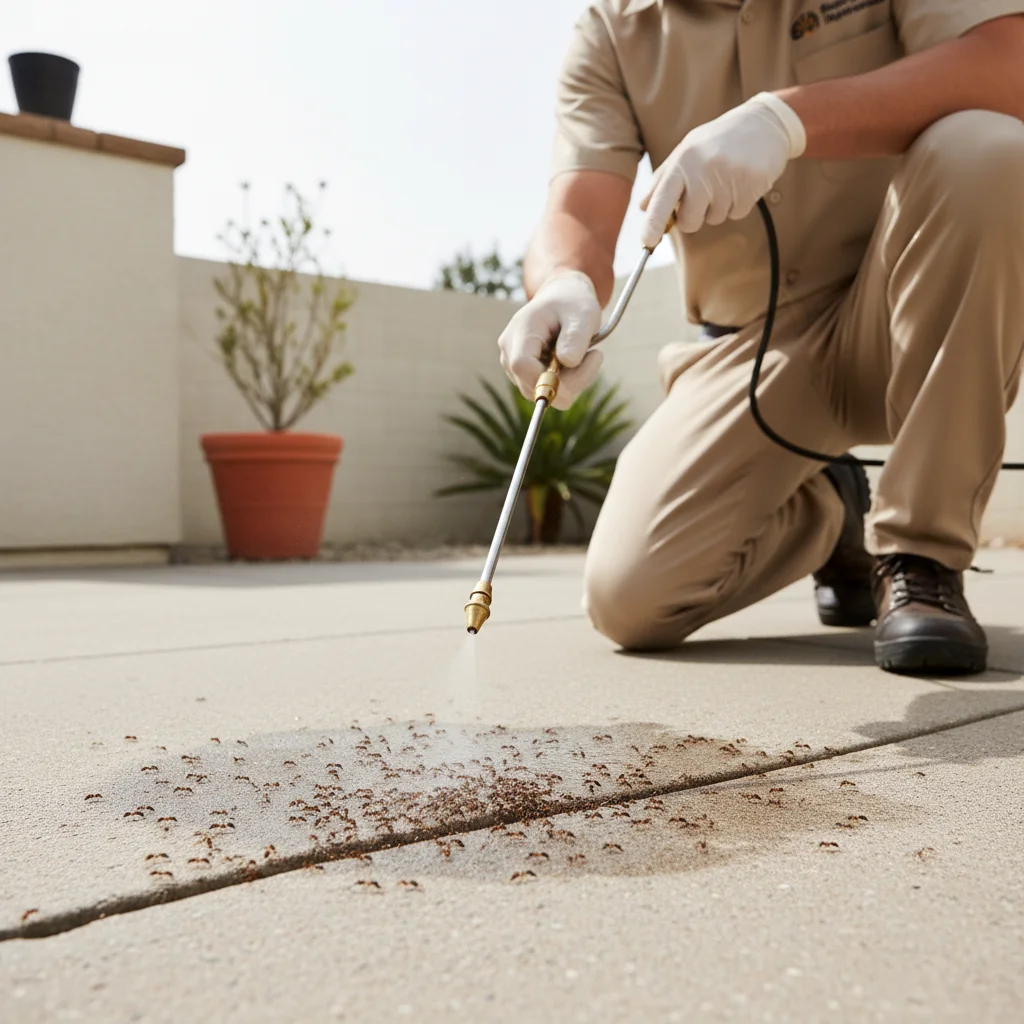
Do not choose a company by a promised quarterly calendar or a predicted week-by-week decline. Ask:
- What species did you identify, and from what evidence?
- Where does the trail leave the building, and what moisture or food sources sit on the other side?
- Which labeled bait or other product fits that species and site?
- How will you judge whether the colony-directed work is having an effect, and what follow-up is in writing?
The company you are matched with inspects the property first and quotes in writing before any treatment begins.
If you want to stop this from happening again
Sealing entry points and cutting off easy food and water sources reduces the next surprise trail. Our guide on how to keep ants out permanently in San Diego covers prevention in more depth.
Frequently asked questions
Why did ants show up overnight when I didn’t see any yesterday?
UC IPM says ants may appear suddenly when food sources change or weather drives them indoors. A scout that finds food or water can recruit other workers along a scent trail. That does not, by itself, name the species.
Is it okay to spray the ants I can see while I wait for an appointment?
UC IPM prefers sanitation, exclusion, and bait over indoor sprays. Spraying visible workers will not keep more ants from entering. Wiping with soapy water is the stopgap.
Will the ants go away on their own if I just clean up the food source?
Removing food and water helps. UC IPM still focuses on outdoor colonies and entry points. Recurring trails after cleanup are a reason for inspection, not a visit-count rule.
How fast does treatment work once it’s applied?
UC IPM says it can take 5 to 10 days to see fewer ants with bait, and that the pesticide must be slow-acting. Your product’s label is the schedule that applies. This page does not promise a multi-week outcome.
Do I need quarterly service or is one-time treatment enough?
That is the matched company’s written plan after identification, not a rule based on how many sudden trails you counted this year. Ask what evidence would trigger a return visit.
If you’re staring at a trail right now, put the spray can down, take a photo, and call (858) 400-6561 to get matched with a licensed local pro.