
A home sale can make a termite question suddenly urgent. A termite inspection in San Diego checks visible, accessible areas for evidence of wood-destroying pests and documents recommended corrections. Buyers and sellers should also get the access limits, findings, and next steps in writing.
What a licensed termite inspector checks
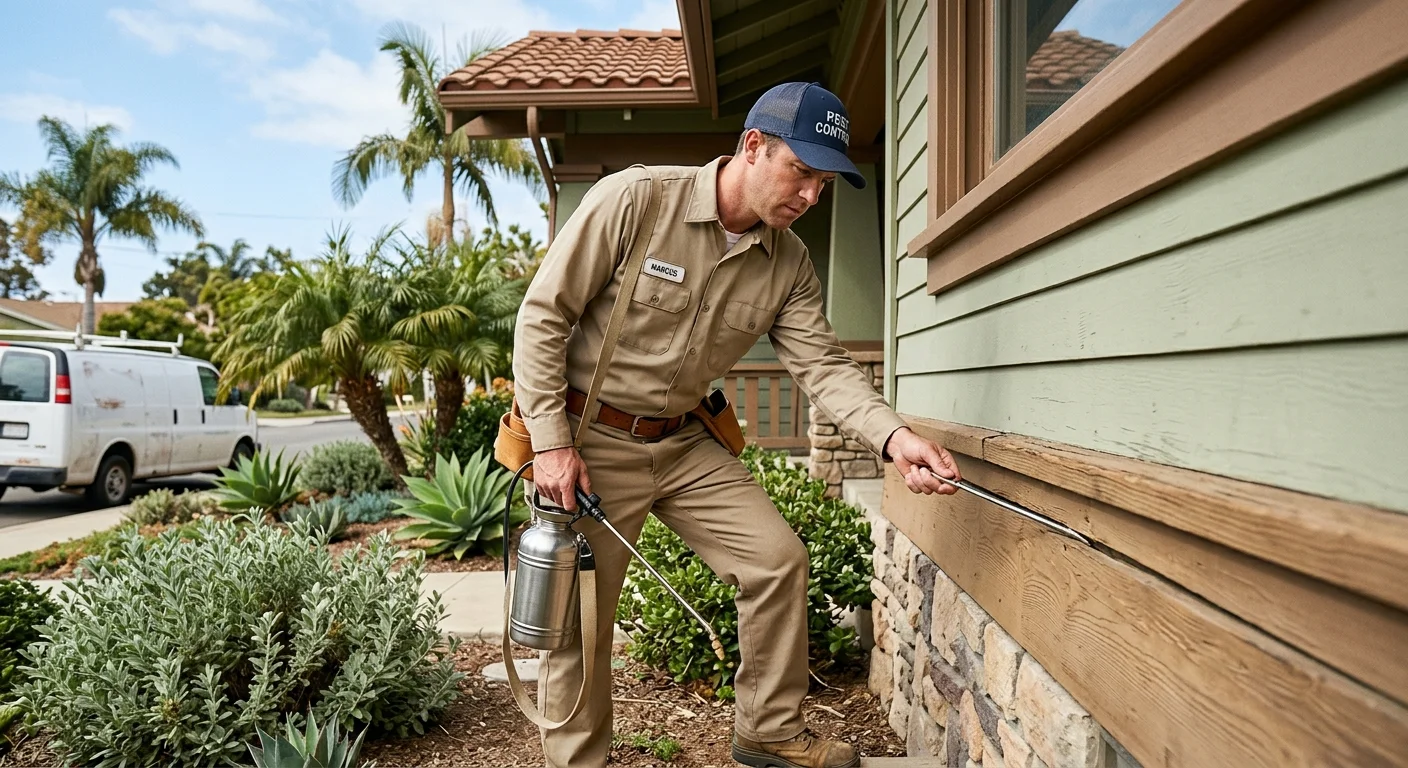
A formal Wood Destroying Pests and Organisms Inspection Report covers visible and accessible areas. It records whether the inspector found evidence of wood-destroying pests or organisms. It also includes recommendations for correcting identified problems.
The visible and accessible limitation matters during a sale. Finished walls, stored belongings, locked rooms, and enclosed building areas can block a clear view. Ask the inspector to identify every area that couldn’t be examined. That list helps both parties understand what the report does and doesn’t cover.
Drywood and subterranean termites leave different evidence. UC IPM identifies six-sided fecal pellets and small kickout holes as diagnostic signs of drywood termites. Subterranean termites nest in soil and build shelter tubes between the soil and wood. Our guide to drywood and subterranean termites in San Diego explains why that distinction matters.
An inspector may examine accessible wood, crawlspaces, attic areas, garages, decks, and other included structures. Confirm the exact scope before booking. Don’t assume a detached garage, fence, shed, or patio cover is automatically included.
San Diego properties need address-specific planning. A detached garage behind a North Park house presents different access issues than a shared condo garage in La Jolla. A Point Loma crawlspace also needs a different plan than an El Cajon home built on a slab.
Share any evidence you’ve already noticed. Our guide to common signs of termites can help you describe pellets, tubes, damaged wood, or swarmers without deciding the species yourself. The licensed inspector should make that identification.
How inspection findings differ from treatment advice
An inspection finding documents observed evidence. Treatment advice explains how a company recommends correcting that finding. Those are connected decisions, but they aren’t the same thing.
A Wood Destroying Pests and Organisms report may document the presence or absence of evidence in visible, accessible areas. It may also recommend corrective work. The report doesn’t mean every concealed space was opened or every hidden gallery was found. Read the access limitations beside the findings.
The identified termite also shapes the recommendation. UC IPM describes both localized and whole-structure approaches for drywood termites. Whole-structure fumigation can reach accessible and inaccessible infestation sites, while localized work depends on identifying the infestation’s extent. Subterranean termite work may involve soil-applied products, baiting, and correcting moisture or wood-to-soil conditions.
Licensing roles matter here. A properly registered Structural Pest Control Board Branch 3 company issues WDO reports. Branch 3 covers termite and other wood-destroying pest work that doesn’t use lethal fumigant gases. Only a Branch 1 licensee may perform structural fumigation.
If treatment is recommended, ask for a separate written proposal. It should connect each proposed step to a documented finding. The company should also explain whether it recommends localized work, broader treatment, repairs, or another inspection after access changes.
Don’t treat a treatment proposal as proof that the sale must stop. Buyers, sellers, agents, and lenders may have different document needs. The inspection company explains its findings, while the parties decide how those findings affect their agreement. The matched company inspects first and quotes in writing before any treatment begins.
Questions buyers and sellers should ask about the report
A useful report should make the property easier to understand. It shouldn’t leave both sides guessing which structure, room, or finding a recommendation concerns.
Ask these questions before accepting the report:
- Which buildings and exterior features were included in the inspection?
- Which areas were visible and accessible during the visit?
- Which areas couldn’t be inspected, and what blocked access?
- What evidence supports each termite or wood-destroying organism finding?
- Does each photo identify the room, wall, garage, deck, or exterior area shown?
- Is this a formal WDO report from a registered Branch 3 company?
- Which recommendations address an infestation, and which address contributing conditions?
- If fumigation is proposed, which licensed Branch 1 company would perform it?
- Will treatment, repairs, or another inspection receive separate written pricing?
- What written coverage or re-treatment terms, if any, come with the proposed work?
Buyers should ask whether the report covers every structure involved in their decision. Sellers should confirm that access is ready before the appointment. Moving stored items or arranging entry may help the inspector reach areas that would otherwise remain unexamined.
If a lender requests a WDO report, ask the lender which document it accepts. Don’t rely on an assumed expiration period. Report timing comes from the lender, so confirm the lender’s requirements rather than relying on a universal report-expiration date.
California’s Structural Pest Control Board also maintains property-address records for WDO activity filed within the previous two years. That record can provide useful context, but it doesn’t replace a current inspection. Conditions and accessible areas may differ between visits.
Both parties should keep the complete report, photographs, and written proposal together. That makes it easier to compare the documented finding with any recommended treatment or repair.
How to compare inspection companies before booking
Start by checking credentials. California allows consumers to search structural pest control businesses and individual licensees through the Structural Pest Control Board license search. Select the Structural Pest Control Board and review the available license type and status information.
For a formal WDO report, confirm that a properly registered Branch 3 company will issue it. Ask who will perform the inspection and who will sign the report. The Structural Pest Control Board says a structural pest control field representative is licensed by the board to secure structural pest control work, identify infestations or infections, make inspections, apply pesticides, submit bids for or otherwise contract, on behalf of a registered company.
Next, compare scope instead of comparing one headline fee. Give each company the same property details. Mention detached structures, crawlspaces, attic access, decks, stored belongings, and any lender request. Ask each company to state what’s included and excluded.
Fixr puts a one-time termite inspection at $150 to $350, from its national cost guide updated January 31, 2025. That figure is a national cost-guide range, not a Pest Pros San Diego fee. Our San Diego termite inspection cost guide explains the factors worth comparing. The actual company should provide its own written price and scope before you book.
A lower quote may cover less of the property. One company may include a detached garage, while another may quote it separately. Compare the report type, structures covered, access expectations, photographs, and delivery format.
Also ask how proposed treatment is separated from the inspection. A clear process lets you review findings before deciding whether to authorize corrective work. Any warranty or re-treatment coverage belongs to the matched company’s written agreement, not to Pest Pros San Diego.
Our termite inspection service connects San Diego County property owners with licensed local companies. We match the property and requested report with a company holding the appropriate California credentials.
Frequently asked questions
Is a termite inspection the same as a WDO inspection?
Yes. WDO stands for Wood Destroying Pests and Organisms, and it’s the formal name for the report a licensed inspector files. The Structural Pest Control Board says most lending institutions require that homes in California be inspected for wood destroying pests and organisms before financing a home loan. Ask your lender and your escrow officer which document they want by name.
What is the difference between Section 1 and Section 2 on the report?
Business and Professions Code 8516 requires the report form to separately identify the infestation or infection that is evident and the conditions that are present that are deemed likely to lead to infestation or infection. The first group is something already there. The second group covers conditions the statute names, such as earth-wood contacts, excessive moisture conditions, and insufficient ventilation. The same section says those conditions may never be characterized as actual active infestations. Ask your inspector which group each line item sits in.
Who pays for the termite inspection and any Section 1 work in a San Diego sale?
It’s negotiable and it belongs in the contract. Civil Code 1099 ties delivery of the report to the buyer to whether certification or preparation of a report is a condition of the contract, or a requirement imposed as a condition of financing. Neither statute assigns who pays for the work. Put that in writing with your agent rather than relying on a local custom.
Can I use my own inspector rather than the one the agent suggests?
Yes. Business and Professions Code 8516 says the inspection report shall contain a statement, printed in boldface type, that reports on this structure prepared by various registered companies should list the same findings, that recommendations to correct these findings may vary from company to company, and that you have a right to seek a second opinion from another company. That right is worth using on an older home or one with limited crawlspace access. Verify whoever you use against the California Structural Pest Control Board record before booking.
When to call us
Call when a pending sale, visible termite evidence, or an unclear prior report needs review by a licensed pest control professional. Call us at (858) 400-6561 and we’ll match you with a licensed local pro.