
You see a line of ants marching across your kitchen counter or a spider setting up shop in a corner. The first impulse for many San Diego homeowners is a quick trip to the hardware store for a can of spray or a set of traps. That can settle a small, isolated problem. It is a short-term knockdown when the nest, colony, or harborage is still in the building.
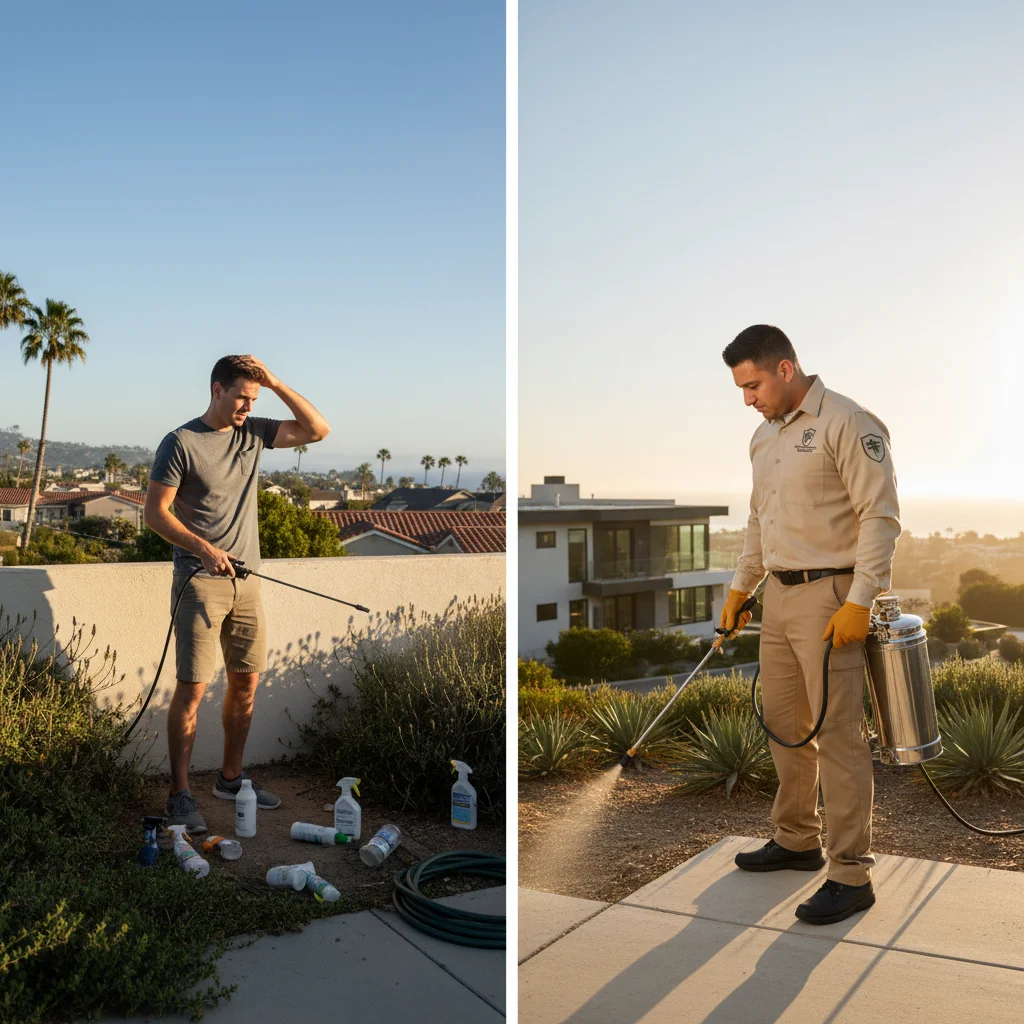
The allure of DIY pest control
It’s easy to understand the appeal of do-it-yourself pest control. The shelves are full of products that promise quick and easy results. The primary drivers for choosing the DIY route are almost always convenience and perceived cost savings.
You can grab a bottle of insecticide while you’re already out running errands and treat the problem on your own schedule. There’s no need to make appointments or coordinate with a technician. For a small, visible problem, like a few sugar ants drawn to a spill, a simple bait trap can sometimes feel like an effective solution. It provides a sense of immediate action and control over the situation in your own home.
However, this initial convenience can be misleading. While you might save the cost of a service call upfront, the total expense can grow if the problem isn’t fully resolved. Multiple trips to the store for different products, wasted time on ineffective methods, and a larger infestation can erase any initial savings. Over-the-counter products are labeled for consumer use. They are not a licensed company’s inspection.
The hidden risks and costs of going it alone
While spraying a can of bug killer might seem straightforward, the DIY approach carries significant risks that aren’t always obvious. These risks can affect your health, your home, and your wallet.
First and foremost is the danger of misidentification. Not all pests are created equal, and the wrong treatment can be ineffective or even make the problem worse. A classic San Diego example is the Argentine ant. UC IPM: spraying foragers does not kill the colony, and indoor sprays do not stop more ants from entering. That is why spraying for Argentine ants often fails. We do not have a first-party log of how many times that happens.
Effectiveness is another major issue. Store-bought products may kill the pests you see without reaching the nest, hive, or colony. This leads to a frustrating cycle of recurring activity. You’ll keep buying products and fighting the same battle, while the source continues out of sight.
Safety is also a serious concern. Pesticides are chemicals that must be handled with care. Misusing them, applying too much, using an indoor product outside, or not following ventilation instructions, can pose a risk to your family and pets. Professionals are trained in the safe and correct application of these materials, ensuring they are used effectively and responsibly according to guidelines from the Environmental Protection Agency (EPA). For some pests, like termites, a failed DIY attempt doesn’t just mean more bugs; it means potential structural wood damage. This page does not publish a repair dollar figure.
When DIY is a reasonable first step
Despite the risks, there are a few situations where a DIY approach can be a sensible starting point. The key is to address small, isolated issues before they have a chance to become full-blown infestations.
If you spot a single, non-threatening spider, using a vacuum or a cup and paper is a perfectly fine solution. For a few ants that have found a crumb on the floor, cleaning the area thoroughly and placing a couple of store-bought bait stations can sometimes resolve the issue. If you find a small wasp nest forming on an outdoor structure far away from doors, windows, and high-traffic areas, a can of wasp spray (used carefully, according to directions, at dusk) might be sufficient.
The main principle here is containment. DIY methods are best suited for pests that are few in number and have not yet established a significant presence in your home. It’s also about prevention. Sealing small cracks in your foundation, fixing leaky pipes, and ensuring food is stored in airtight containers are all DIY tasks that make your home less attractive to pests.
However, if you try a DIY solution and the problem persists or returns, it’s a clear sign that the issue is bigger than it appears. Continuing to self-treat at that point is often a waste of time and money. It’s the moment to recognize the limits of DIY and call for professional help.
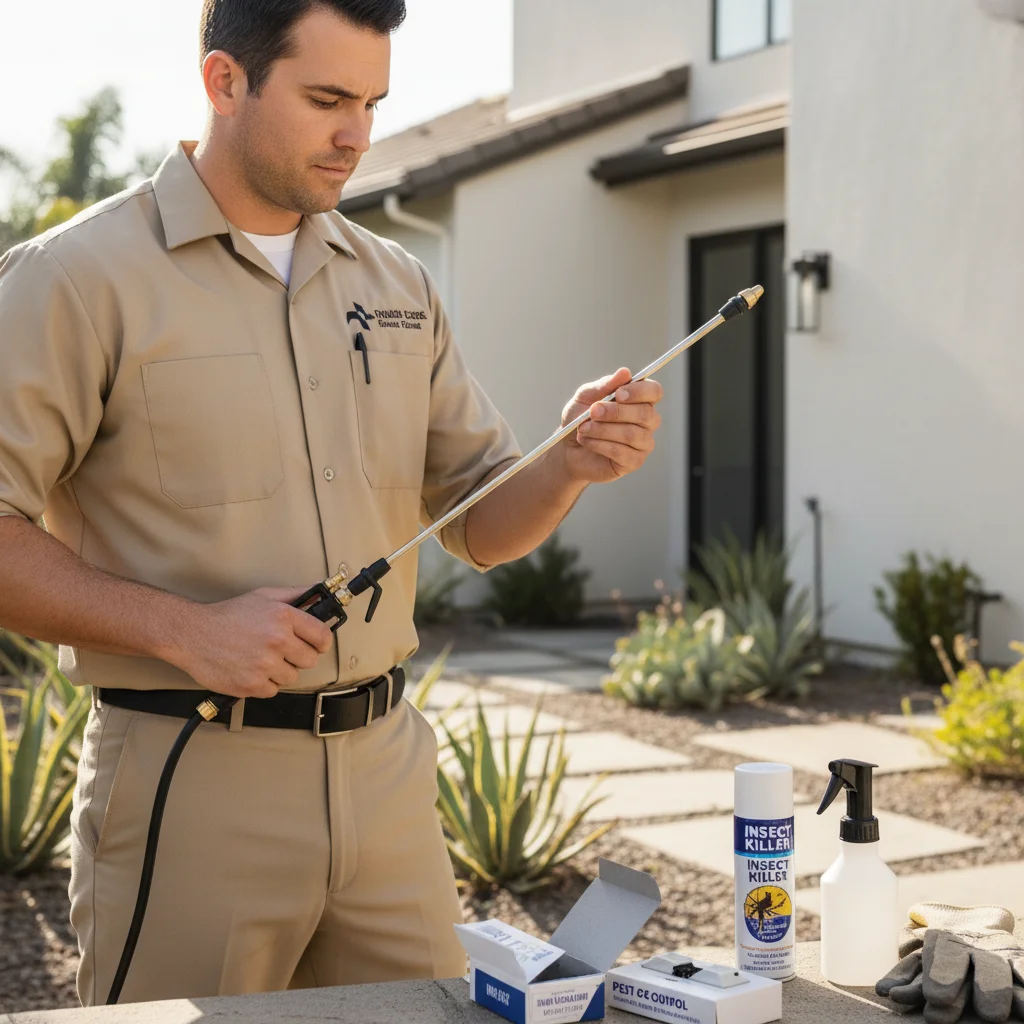
The professional advantage: expertise, equipment, and effectiveness
Hiring a licensed pest control company provides identification, labeled products, and equipment a homeowner may not have. That is not the same as a stronger grocery-aisle can.
The biggest advantage is correct identification. A trained applicator can distinguish between the various types of cockroaches found in San Diego or determine if you have drywood or subterranean termites, which require completely different treatment methods.
Licensed companies may use products and equipment not sold for general consumer use. Ask what is on the label for your site. The companies in a match should follow Integrated Pest Management (IPM), the strategy described by the UC Statewide IPM Program, which focuses on long-term prevention and uses targeted chemical treatments only when necessary. Follow the EPA’s consumer pesticide safety guidance on any product you apply yourself.
A licensed inspection should find how pests are getting in and what’s attracting them, then quote treatment, exclusion, and sanitation as separate items when they are. Reputable companies put follow-up terms in writing. Pest Pros San Diego does not guarantee anyone’s work.
Pests in San Diego that almost always require a professional
While a stray ant might be a DIY job, some pests common in San Diego County pose too great a risk to your property and health to tackle alone. For these, professional intervention is not just recommended, it’s essential.
Termites: This is the big one. Termites can damage wood in the structure. This page does not publish a national damage total. DIY termite products are almost never enough for an entire colony. A professional termite inspection is the step that finds how far activity has gone, and a proper termite treatment is what protects the wood.
Bed Bugs: Bed bugs are notoriously resilient and experts at hiding. Over-the-counter products often fail to reach hiding spots. This page does not map a scatter path into other rooms. Eradicating them is a licensed-company question, which is why professional bed bug treatment belongs on a match request.
Rodents: The common rats in San Diego homes are more than just a nuisance; they carry diseases and can chew through wiring, creating fire hazards. Simply setting a few traps is rarely enough. A professional rodent control service involves trapping, removal, and, most importantly, exclusion work to seal entry points and prevent them from returning.
Cockroaches: One indoor cockroach is a reason to inspect harborage, not a sourced count of how many are out of sight. This page does not map an indoor German breeding or asthma claim, and it does not publish a bait, insect-growth-regulator, or crack-and-crevice product stack. A professional cockroach control visit is a licensed-company question aimed at the population, not the one insect you saw.
Widespread Ant Infestations: For a major ant problem, especially with species like the Argentine ant, DIY methods often fail. A professional ant control service can identify the species and use non-repellent products that ants carry back to the colony, effectively eliminating it at the source.
What to expect from a professional pest control service
Choosing a licensed pest control company means you are paying for an inspection and a written scope. Pest Pros San Diego is a referral matcher. We do not send a technician.
The matched company should inspect, identify the pest, and quote before treatment. Ask about interior, exterior, attic, and crawl space if those areas are involved. There is no one-size-fits-all solution from this site.
Verify any pest control company’s license with the Structural Pest Control Board of California. Follow-up visits, if any, are that company’s terms.
Frequently asked questions
Is DIY pest control cheaper than hiring a professional?
Up front yes, over time often not. When DIY fails the infestation is usually larger by the time a professional sees it, so the treatment needed is more intensive and costs more. With termites in particular, delay converts a treatment bill into a structural repair bill.
What pest problems are reasonable to handle myself?
A small, contained ant trail, the occasional spider, or a single wasp nest in an accessible spot with no allergy risk in the household. Prevention work is also entirely DIY: sealing gaps, cutting wood-to-soil contact, fixing moisture, and keeping vegetation off the structure.
What should always go to a professional?
Termites, bed bugs, German cockroaches, rodents in the structure, and any stinging insect nest that’s large, hidden, or near a doorway. Those all share a trait: the part you can see is a fraction of the problem, and partial treatment makes them harder to resolve.
Are professional products just stronger versions of what I can buy?
Not stronger so much as different chemistry and a license. Consumer repellent sprays often kill what you see. Licensed work may use baits or other labeled products that target a colony, plus training on where product may legally go. Read the EPA label either way.
When to call us
If you’re dealing with a pest problem that’s more than a minor nuisance, or if your DIY efforts have failed, request a licensed inspection. Pest Pros San Diego matches San Diego County homeowners with licensed local companies. We do not treat the house.
Call us at (858) 400-6561 to get matched with a licensed local company.