
A WDO report in San Diego is the wood destroying organism inspection report a registered pest control company prepares after checking a property for termites, wood rot, and other wood destroying pests. The report itself does not go to the state. Business and Professions Code 8516 says the address of each property inspected or upon which work is completed shall be reported on a board form and filed with the board no later than 10 business days after the commencement of an inspection or upon completed work. The same section requires the written report to be prepared and delivered to the person requesting the inspection and to the property owner within 10 business days from the start of the inspection. The Structural Pest Control Board says most lending institutions require that homes in California be inspected for wood destroying pests and organisms before financing a home loan. The report separates what’s already there from conditions that could lead to infestation later, and that split is what buyers, sellers, and lenders read first.
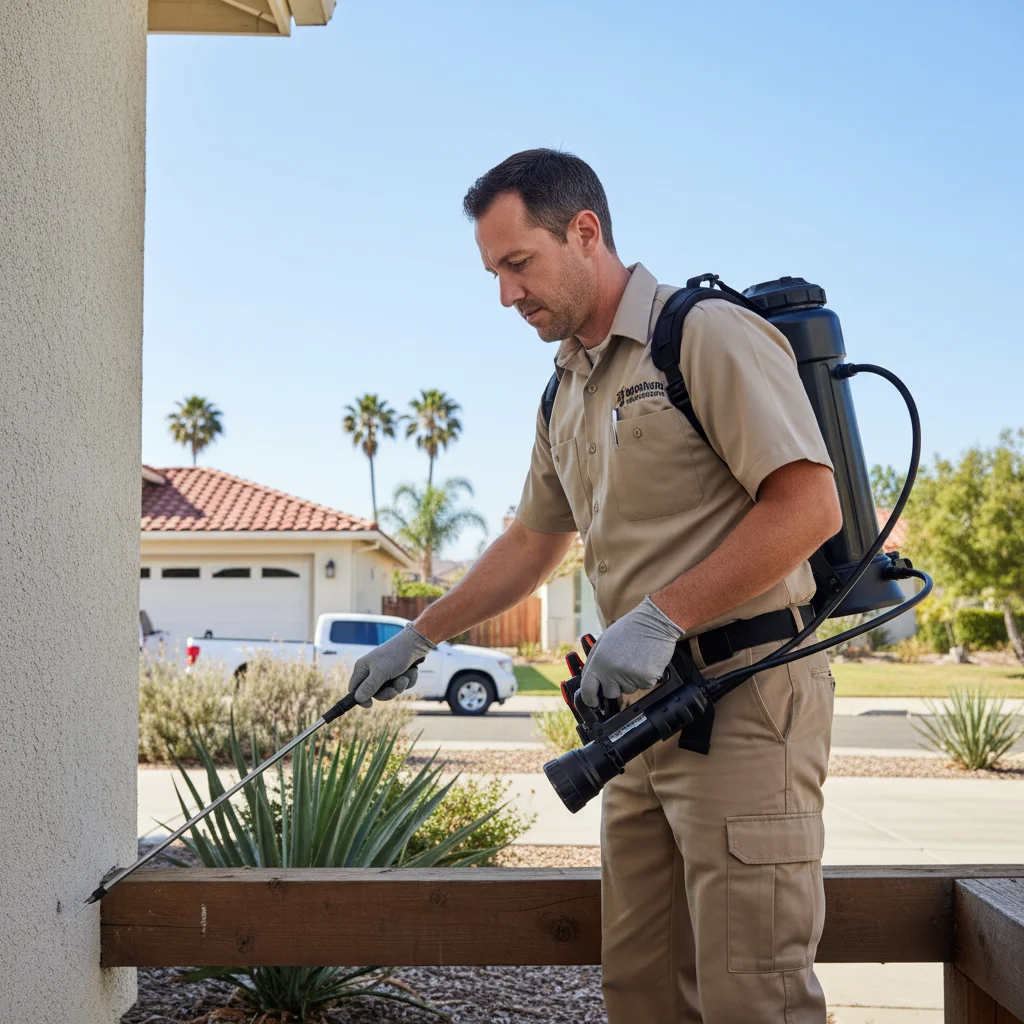
What is a WDO report, exactly?
It’s a standardized form, the Structural Pest Control Board’s official inspection report, prepared after a visual check of the accessible parts of a home. Business and Professions Code 8516 requires that inspection to be made by a licensed Branch 3 field representative or operator employed by a registered company, which is the wood destroying pests and organisms license rather than the general household pest one. “WDO” stands for wood destroying organism, which covers subterranean termites, drywood termites, dampwood termites, wood boring beetles, and fungus decay from moisture. By statute the report covers the substructure, foundation walls and footings, porches, patios and steps, air vents, abutments, attic spaces, and roof framing, along with other parts subject to attack by wood destroying pests or organisms.
The report isn’t a pass or fail. It’s a list. Every finding gets sorted into Section 1 or Section 2, and that sorting is what buyers, sellers, and lenders actually care about.
Section 1 versus Section 2: the difference that matters
Section 1 is the group Business and Professions Code 8516 calls the infestation or infection that is evident: live subterranean termite activity in a crawl space, drywood termite pellets under an attic rafter, or fungus decay in a sill plate. These are findings of something already present, which is why they drive the corrective work.
Section 2 is what the statute calls the conditions that are present that are deemed likely to lead to infestation or infection. The code names earth-wood contacts, excessive cellulose debris, faulty grade levels, excessive moisture conditions, evidence of roof leaks, and insufficient ventilation. The same section says those conditions may never be characterized as actual defects, as actual active infestations, or as needing correction before a certification can issue. Whether they get fixed is a negotiation between buyer and seller.
The confusion homeowners run into is assuming every line on the report is a dealbreaker. Ask the inspector which lines are evident infestation and which are conditions, because the statute requires the form to keep the two apart.
What is Section 1 clearance and why does it matter for a home sale?
Clearance means the evident items on the original report have been corrected and a licensed company has documented it. Civil Code 1099 refers to a notice of work completed as contemplated by Section 8518 of the Business and Professions Code, indicating action by a structural pest control licensee in response to an inspection report, or a certification in accordance with Section 8519 of the Business and Professions Code. The statute says that paperwork has to be furnished to the buyer as soon as practical before transfer of title. Which document your lender will accept is a question for the lender, not a single statewide rule.
Timing is where a sale stalls. A written inspection report has to be prepared and delivered to the person requesting the inspection and to the property owner within 10 business days from the start of the inspection. A reinspection, which checks whether the recommendations on an original report were completed, has to be completed within 10 business days after it’s ordered and may cost no more than the original inspection price. After four months from an original inspection, all inspections are original inspections and not reinspections, so sitting on an old report can cost you a second full visit.
Who orders the inspection and who pays for the work?
No statute assigns this. Civil Code 1099 puts the duty to deliver the report on the transferor, fee owner, or their agent, and only where certification or preparation of a report is a condition of the contract or a requirement imposed as a condition of financing. Who orders it and who pays for the corrective work is a term of your purchase agreement. Get it written down rather than relying on what someone says is customary.
Buyers can order an independent second inspection. Business and Professions Code 8516 says the inspection report shall contain a statement, printed in boldface type, that reports on this structure prepared by various registered companies should list the same findings, that recommendations to correct these findings may vary from company to company, and that you have a right to seek a second opinion from another company. That right is worth using on an older home or one with a crawl space that’s hard to reach, since UC IPM notes detection of difficult-to-find infestations may require removing walls, paneling, and stucco.
How long does Section 1 clearance take?
The statutory clock is the part you can rely on. The written report is due within 10 business days from the start of the inspection, and a reinspection is due within 10 business days after it’s ordered. How long the corrective work itself takes depends on what was found and who does it, and no statute sets that. Ask the matched company for its schedule in writing before you authorize anything.
Ordering the inspection as soon as a property goes under contract, rather than waiting until the middle of the escrow period, leaves room for the report, the corrective work, and a reinspection before the closing date. The four-month limit on reinspections is another reason not to sit on an old report.
What happens if the report finds a serious Section 1 problem?
A large active colony or significant structural wood damage turns a treatment line item into a repair scope, and the price or the responsibility usually gets renegotiated. Ask for the costs in pieces: if you request it when you order the report, and the registered company is regularly in the business of performing each corrective measure, it has to give an estimate or bid separately allocating the costs to perform each and every recommendation. A company that only inspects is not required to bid the repairs. A pre-listing inspection, done before a home ever goes on the market, gives a seller time to handle a serious finding before an escrow deadline exists.
Does every home sale require a WDO report?
Not by state law on its own. The Structural Pest Control Board says most lending institutions require that homes in California be inspected for wood destroying pests and organisms before financing a home loan, and Civil Code 1099 requires the report to reach the buyer where certification or preparation of a report is a condition of the contract or a requirement imposed as a condition of financing. A cash sale with neither condition isn’t covered by either one, though a buyer can still order the inspection. Ask your lender and read your contract rather than assuming.
Getting a WDO report or Section 1 clearance in San Diego
If you’re buying, selling, or already waiting on clearance paperwork, the licensed companies we match you with through termite inspection prepare the standard board inspection report that San Diego lenders and escrow companies ask for, and report the property address to the board as the code requires. We work across the county, from Del Mar to Rancho Santa Fe. If the report already came back with Section 1 findings, our drywood versus subterranean termite guide explains what kind of treatment each type actually needs, and our guide to preparing for termite fumigation walks through what to expect if tenting is the recommended fix. For a breakdown of typical inspection pricing, see our termite inspection cost guide. City-level walkthroughs are up for the older coastal and East County housing stock too: Coronado termite inspection, Lakeside termite inspection, Del Mar, and Imperial Beach.
Call (858) 400-6561 and we’ll match you with a licensed local pro for the inspection or the reinspection. The company you’re matched with sets its own schedule and quotes its own price in writing.
Frequently asked questions
What does WDO stand for on a termite report?
WDO stands for wood destroying organism. It covers subterranean termites, drywood termites, dampwood termites, wood boring beetles, and fungus decay, which are the pests and conditions a licensed inspector checks for on the standardized state inspection report used across California.
What’s the difference between a Section 1 and Section 2 item?
Business and Professions Code 8516 requires the form to separately identify the infestation or infection that is evident and the conditions that are present that are deemed likely to lead to infestation or infection. The first is something already there. The second is a condition such as earth-wood contacts, excessive moisture conditions, or insufficient ventilation, and the statute says it may not be characterized as an actual active infestation.
Who pays for Section 1 clearance in a San Diego home sale?
No statute assigns it. Civil Code 1099 puts the delivery duty on the transferor, fee owner, or their agent where a report or certification is a condition of the contract or a requirement imposed as a condition of financing, but who pays for the work is a term the buyer and seller negotiate. Put it in the purchase contract.
How long does it take to get Section 1 clearance after the inspection?
The report itself is due within 10 business days from the start of the inspection, and a reinspection is due within 10 business days after it’s ordered. The corrective work in between has no statutory clock, so ask the matched company for its schedule in writing. Ordering early leaves the most room before closing.
Can I sell my house without a WDO report in San Diego?
There’s no state law forcing every sale to have one. The Structural Pest Control Board says most lending institutions require that homes in California be inspected for wood destroying pests and organisms before financing a home loan, and Civil Code 1099 requires delivery where a report or certification is a condition of the contract or a requirement imposed as a condition of financing. A cash sale with neither condition isn’t covered, though a buyer can still order one.
Does a WDO report cover the whole house?
It covers visible and accessible areas. The statute requires the report to give an indication or description of any areas that are inaccessible or not inspected, with a recommendation for further inspection if practicable. It doesn’t require opening finished walls or ceilings, and UC IPM notes the minimum requirement for termite inspections includes visual searches of accessible areas, so damage hidden behind drywall with no visible signs can be missed.